

Eric Haugen
Snow and ice workflows provide stability for your opertations
Let’s be honest, if you’ve been in snow removal for more than a week, you’ve probably had that call. The one that comes in at 2 a.m. from an upset client wondering where your crew is, why the lot isn’t cleared, and whether you’ve forgotten how to tell time. We’ve all been there. It’s not fun, but it’s also not inevitable.
The difference between chaos and control usually comes down to one thing: a clear, well-documented workflow. If you've ever found yourself on the receiving end of that call — while coordinating crews, fielding complaints, and wondering who drove off with the salt spreader — you’re not alone. The reality? Snowstorms are unpredictable, but your operation shouldn’t be.
The snow industry doesn’t lack intelligent, hard workers. It lacks hardwired workflows: documented, repeatable systems that keep your business moving forward when everything around you is frozen.
Do you have a plan—or a panic button?
Most snow contractors will say they “have a system.” But if that system lives in one person’s head or relies on everyone just “knowing what to do,” it’s not a process. It’s a liability waiting to happen.
Before last season, I sat down with a client and his management and admin team to talk about structure, position expectations and the power of photo documentation to reduce risk. The energy in the room was great. Everyone was excited to bring clarity to their roles. We joked they might finally get some sleep that season.
Then came the call.
Just weeks later, the business owner experienced a slip-and-fall incident on one of their sites. What went wrong? The regional supervisor in charge of ice melt buckets didn’t know it was their job to make sure they were filled. The operators skipped using their site photo documentation program. And the assigned hand crew was late due to a last-minute rerouting that no one confirmed. The fallout was immediate and expensive.
This wasn’t a case of laziness or bad intent. It was the lack of a process and follow through. Everyone assumed someone else was taking care of it. And without clear expectations, accountability, and a shared system, the cracks showed when it mattered most.
A process becomes the brain (and a margin driver)
“Workflow” might sound like another buzzword, but in snow removal, it’s a lifeline and a margin driver. For instance, an efficient workflow process ensures quality, response time, accident prevention, and reduction of costly insurance claims. It serves as the organization’s decision-making tool and is ideal when a situation demands prompt action.
A well-documented process tells your team what to do, when to do it, and how to confirm it’s done — before the storm hits. It also tells your billing department exactly what was done, by whom, and when, so invoices don’t sit in limbo while you track down handwritten logs or post-storm photos from someone’s camera roll.
Documentation is more than record-keeping; it’s a financial strategy. When time logs, site photos, materials usage, and service records are captured in real time, billing becomes immediate, not an afterthought. That accelerates cash flow, reduces accounts receivable delays, and helps you stay ahead on accounts payable, which is especially critical when you’re fueling trucks, ordering salt, and paying crews on tight winter timelines. Plus, your margins can be monitored in real time to expose inefficiencies.
Process is the only thing you can control
You can’t control storm timing, last-minute client requests, or the 4 a.m. mechanical failure. But you can control how your business responds.
Documented workflows bring consistency to an industry where nothing else is consistent. They create continuity across shifts, crews, and even chaotic weeks when the snow just doesn’t stop. And they protect your business against slip-and-fall claims, missed routes, delayed response times, and operational burnout.
And let’s be clear: workflows aren’t just for isolated storms. A single snow event might last eight hours, but the snow season lasts months, and it rarely plays fair. Ice events that drag on for a week, back-to-back storms, early thaws followed by refreezes — they all require different approaches. But the framework behind how you assign work, verify completion, communicate changes, and bill services? That should stay consistent, storm to storm.
That’s why the most successful companies don’t just build a preseason plan and call it good. They run mid-season reviews to see what’s working and what’s breaking, and adjust the processes based on any unintended consequences. They hold postseason debriefs when memories are still fresh and equipment is (mostly) intact. And they use those insights to shape preseason planning the following year and fine-tune processes, because let’s be honest — by the time July rolls around, we’ve all forgotten just how sideways things went in January.
If it’s not written, it’s not real
Every business thinks they have a process — until something breaks. Before I sold my business, I learned the hard way when I discovered during the first storm, on Black Friday weekend, that one of our largest retail centers had no assigned operator. Then the blame game begins: “I thought that was his job,” “No one told me the route changed,” or “I didn’t know we had to clock in.”
I have yet to meet an insurance attorney who simply says, “I'll take your word for it” about a slip and fall. If it’s not written, it’s not a real process.
Your workflow doesn’t have to be fancy. Just functional. And it has to live where your team works — in the field, on their phones, or on a route sheet taped to the dashboard. Don’t bury it in a binder. Make it actionable and stay consistent.
The processes are meant to be sustainable and long term. Give them time to succeed without pivoting every time you discover an unintended consequence (and they will present themselves). You can always make adjustments during pre-, mid- and postseason reviews.
Involve your team
But here’s the real secret: don’t build it alone. The people on your team — the plow drivers, sidewalk crews, dispatchers, mechanics, account managers and office administrators — are in the daily trenches. They’ve seen what breaks down, what gets missed, who clocked in and what really happens at 3 a.m. They don’t just deserve a voice in the process, they’re essential to it.
When your team is involved in building the workflow, you get better insights and better buy-in. People are more likely to follow a process they helped create. And that’s when a process becomes a culture and not just a checklist.
Sustainability
As snow contractors, we live and breathe the unpredictable. But our businesses don’t have to be reactive. When you build a workflow that covers your customers, equipment, documentation, data flow and seasonal rhythm, you’re not just staying afloat during winter; you’re creating something scalable, stable and sustainable. Your clients, team members and income statement will thank you. Imagine having confidence in the job cost report! Imagine having the property manager view a report that is delivered on time, and consistently.
Processes don’t kill flexibility. They give you the structure to be flexible without falling apart. And when the inevitable chaos arrives, the companies that planned ahead won’t be improvising. They’ll be executing.
Draft a workflow process without losing your mind
Through working with various companies to develop sustainable and profitable business models, I have found that the process can be fun and exciting for participants. And though you may be one of those folks that enjoy color-coded flowcharts, Google algorithms, and 23-step decision matrices, they aren’t required during the development. The truth: it doesn’t need to be complex to be effective. A good workflow can start with a simple, four-question framework:
- What is the task? Be specific: apply ice melt, confirm route start, upload photo, etc.
- Who is responsible? Not “someone” — name the role or the person.
- Where is it documented or tracked? Is it entered in an app? Logged in a spreadsheet? Texted to a supervisor?
- How will be know when it’s completed? Proof of completion like photos, checklists, timestamps, etc.
Eric Haugen has over 25 years of experience in the landscape and winter management industry. He specializes in financial metrics, technology management, workflow processes and operational efficiencies in his role with WIT Advisers. Contact him at ehaugen@witadvisers.com.
Related Articles
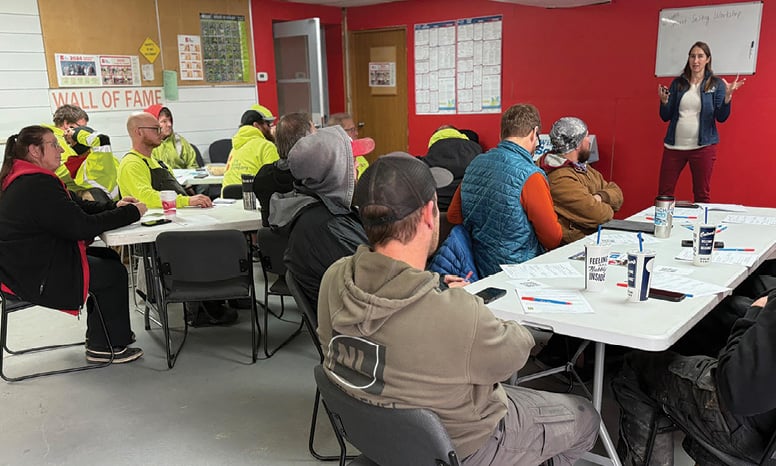
After-action reviews in snow operations
Operations
After-storm reviews give snow and ice teams a way to learn from each event
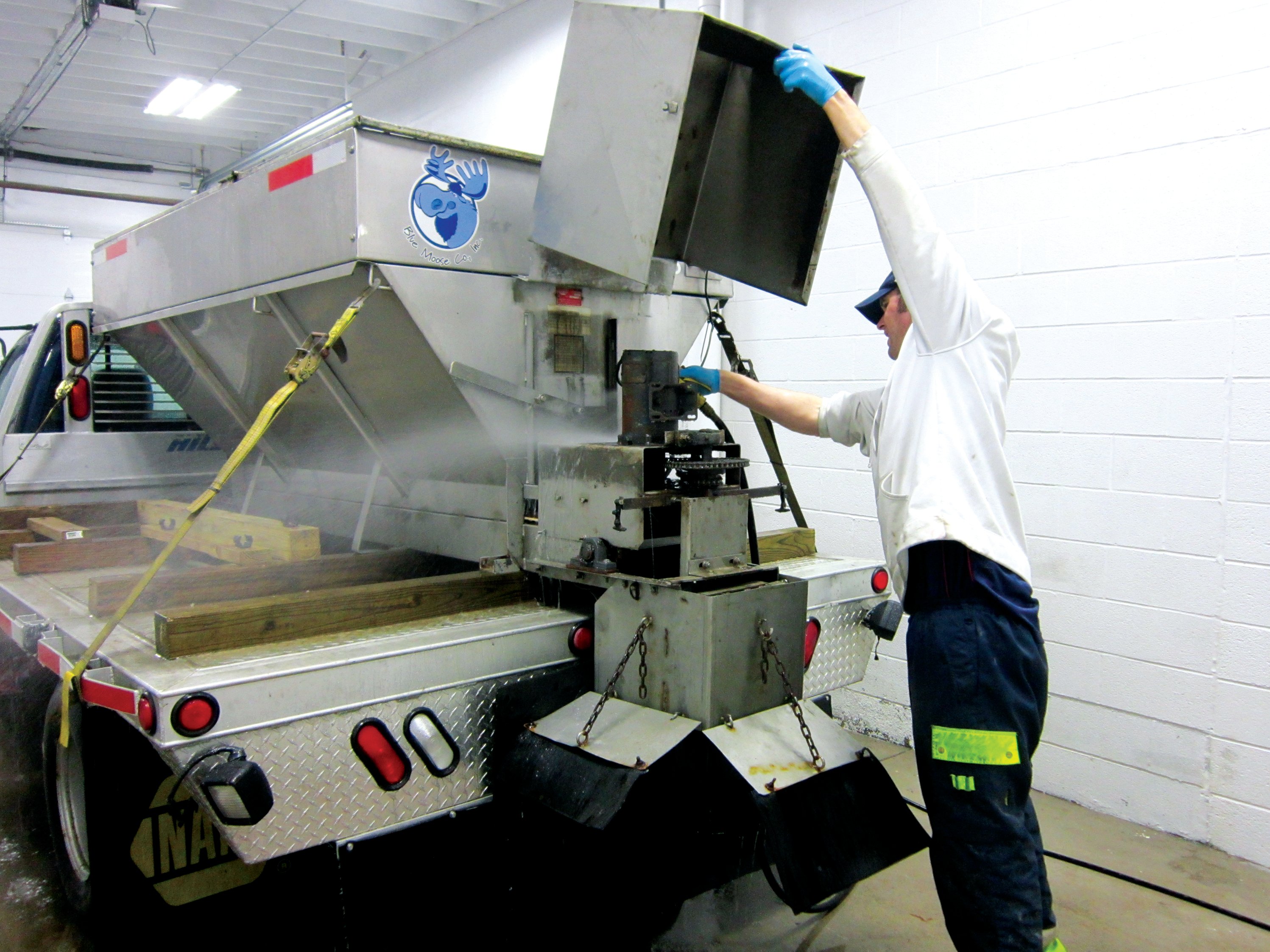
Essential preseason prep for snow removal equipment
Operations
Proactive fleet maintenance can head off equipment issues in the field
Essential preseason equipment planning
Operations
True winter readiness requires foresight, standardization, and workforce management