
Ken Boegeman Jr., CSP, ASM

Every role in your snow company contributes to insurance coverage
When it comes to insurance in the snow and ice management industry, we’re not in the same landscape we were even a few years ago. Carriers are walking away from the snow sector, underwriting is tougher, and premiums are skyrocketing. But not every company is treated the same, and not every premium jump is inevitable.
The truth is that many contractors unknowingly send up red flags during the insurance procurement process. Others don’t realize they can actively shape their risk profile — and their desirability as a client — long before they talk to a broker.
This article will walk you through what underwriters really look for, and how every role, from leadership to admin, can contribute to making your company the kind that carriers want to insure.
Why carriers are walking away
Before we talk about solutions, it’s important to understand the problem. Insurance carriers are fleeing the snow and ice market for a few reasons:
- Unpredictable risks due to the lack of regulatory standards and inconsistent service scopes
- Uncontrolled jury awards in slip and fall cases
- Overconfidence and poor documentation (under or over documenting) among contractors
- Limited understanding of liability exposures at both the contract and operations level
To a carrier, unpredictability = risk. And risk = higher premiums…or a flat-out refusal to quote. But there’s good news: You can flip the script.
What underwriters actually look at
Most contractors assume pricing is based mostly on past claims or loss runs. While that’s one consideration, it’s not the whole picture. Underwriters evaluate:
- The language and structure of your client and subcontractor contracts
- The completeness and consistency of your operational documentation
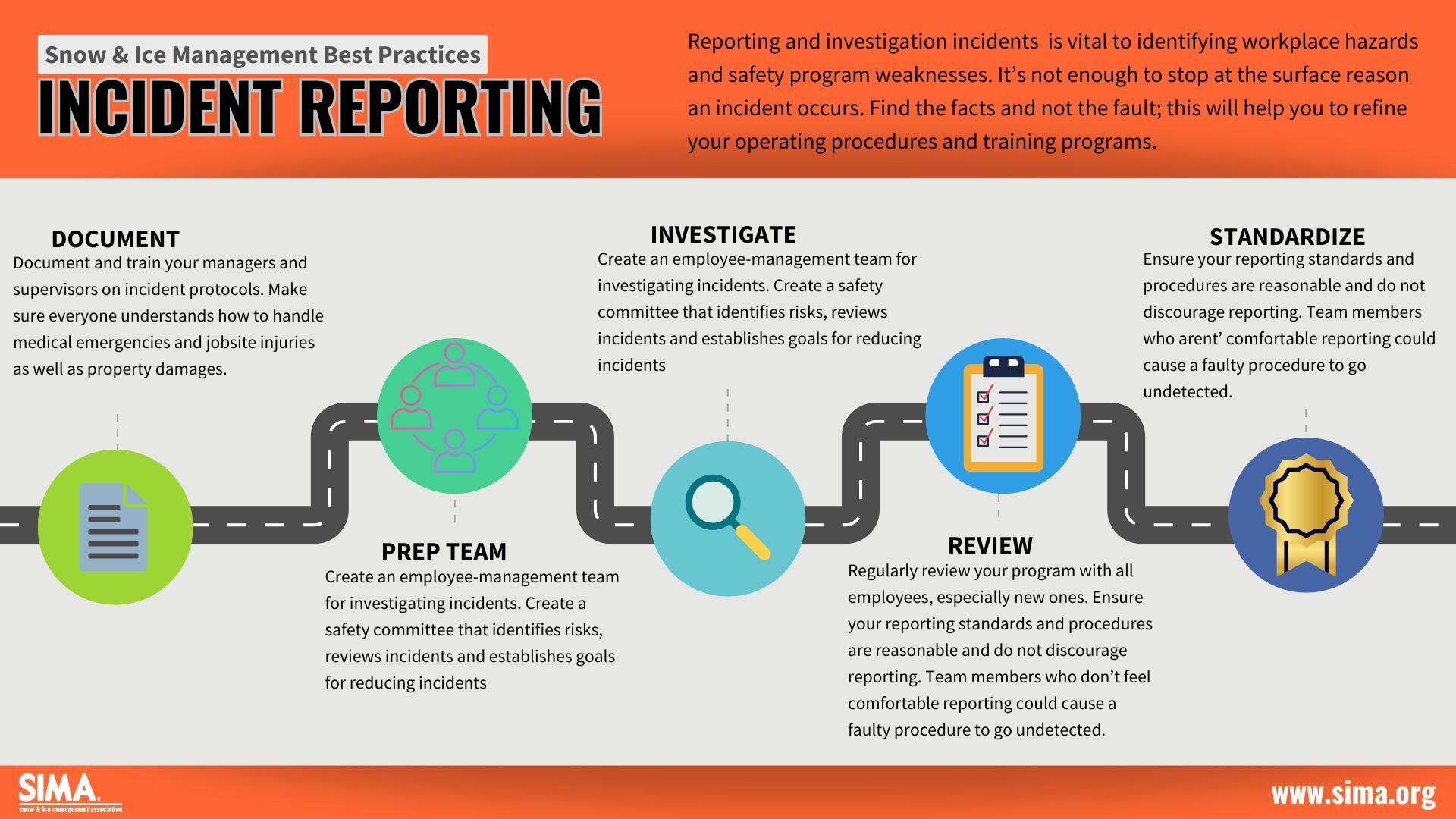
- Your company’s approach to incident response and follow-up
- The depth and documentation of your training program
- Whether your records show risk awareness and professionalism
Think of it this way: Insurance companies are betting on your ability to manage risk. You can’t just say you’re safe. You have to prove it.
Insurance doesn’t have to feel like a gamble. By taking strategic, documented steps throughout the year, your company can sit in the driver’s seat — not just the hot seat — when renewal time comes.
Executives: Tell the right story with the right evidence
Executive leadership plays a critical role in setting the tone and strategy for insurance positioning. Start by asking yourself:
- Are our contracts written to protect our company, not just win the job? On that note, do we have a contract, or are our customers signing a proposal?
- Do we have training documentation that would hold up in court?
- Could we retrieve any slip and fall report, time sheet, or service log from the last six years within minutes?
Work with your broker or insurance consultant to prepare a narrative and data package that reflects who you really are — not just what happened last year.
Also, consider engaging with an industry consultant to evaluate your risk profile from a carrier’s point of view. It’s often the missing piece that changes everything.
Operations: Make the invisible visible
Operations staff are the boots on the ground and the linchpins of defensible documentation. But unless your work is recorded, time-stamped and clear, underwriters won’t be able to see it, which won’t help your case.
Ensure your team is:
- Logging every service occurrence in REAL TIME when services are performed (time, task, materials, weather)
- Taking appropriate notes on any refreeze treatments or other non-standard services
- Using consistent formats for call logs, inspections, and post-event reports
Ensure your team is NOT:
- Solely using photos to document services preformed and/or final property conditions after service
- Solely using GPS to document services performed and/or property service times
- Using different processes from one storm to another
Carriers love to see predictability and repeatability. Your documentation is proof that your company isn’t just reacting, you’re operating with control.
Admins: Simplify annual insurance prep
While executives or owners may lead the charge in insurance negotiations, administrative professionals often carry the weight of assembling the data that shapes how your company is perceived. From contract files and training logs to service documentation and safety records, much of what brokers and underwriters evaluate originates from systems you help maintain. If that responsibility lands on your desk each year, here’s how to make the process smoother for you and for your company’s bottom line.
Build a centralized archive — and use it
Start by establishing a single, secure digital location where you store the records that insurance carriers care about most:
- Executed contracts (with clients and subcontractors)
- Training logs, including dates, topics and attendees
- Service records by occurrence: Who did what, when, where, and with what materials
- Slip and fall incident reports and follow-ups
- Equipment inspection and maintenance logs
- Any correspondence tied to liability or property performance
This doesn’t have to be complicated. Even a well-organized folder structure on a shared drive works if it’s backed up and consistently used year round.
Make “pulling reports” a monthly habit
Don’t wait until renewal season to scramble through the year’s worth of documentation. Set a recurring reminder to export or archive key reports regularly. For example:
- Training logs after each session
- Storm summary reports after each major event
- Incident reports and follow-up actions within 48 hours
These can be added to a “Carrier Packet” folder throughout the year, making you well-prepared when your broker asks for supporting documents.
Work with operations to standardize input
Your job is easier when the data comes in clean. Partner with your operations team to standardize how service logs, training attendance, and safety incidents are reported. If everyone’s using a consistent format (whether through software or a shared form), it reduces time spent sorting or clarifying later. Be sure you know:
- How to create templates or checklists so field leaders know exactly what’s expected
- What to include in a post-event log
- How to label photos or GPS data (if used – which is NOT recommended)
- What constitutes a “complete” slip and fall report
Know what insurers want and don’t want
Not every piece of data you collect is useful for insurance purposes. Focus on records that show consistency, professionalism and risk awareness. These include:
- Consistent documentation across all job sites
- Evidence of pre-event planning (site maps, trigger logs)
- Proof of follow-through (refreeze mitigation, emergency responses)
At the same time, be extremely cautious about including sensitive or poorly framed materials like ambiguous photos or raw GPS data that could be misinterpreted without context. Keep in mind, it is safer to have no data than the wrong data.
Create a summary dashboard
Before renewal season, create a one-page internal dashboard that summarizes:
- Total events serviced
- Training hours completed
- Number of active job sites
- Number of claims filed (if any)
- Any major incidents and how they were handled
This isn’t just a convenience for your leadership, it shows your broker that you run a tight, well-documented operation. When you can hand over organized materials and clear summaries, your company becomes more insurable, and sometimes more affordable to insure.
The strategic checklist: Are you ready?
- Contracts reviewed and updated with indemnification and defense language
- Training records for all employees (dated and signed)
- Service documentation archived by occurrence
- Emergency, refreeze, and incident logs stored securely
- Photos and GPS use reviewed with legal input
- Year-end dashboard ready to summarize operations
Ken Boegeman is the president of SG Advantage and Swinter Group. He has over 13 years of experience as a snow and ice slip and fall expert as well as over 30 years in the snow industry. Contact him at kenb@swintergroup.com.
.png?width=1920&height=1080&name=CONTENT_101_INCIDENT%20REPORTINGBPS_final.pdf%20(3).png)