
Erik Dyba, CSP, ASM
After-storm reviews give snow and ice teams a way to learn from each event
Snow and ice management does not stop once a storm ends. Crews are already planning for the next event, addressing repair needs, and maintaining equipment. Clients expect sites to be ready for whatever comes next. Without deliberate review, familiar issues recur, including missed areas, late starts, uneven material use, and recurring equipment problems. Not because teams do not care, but because lessons were not documented when they mattered.
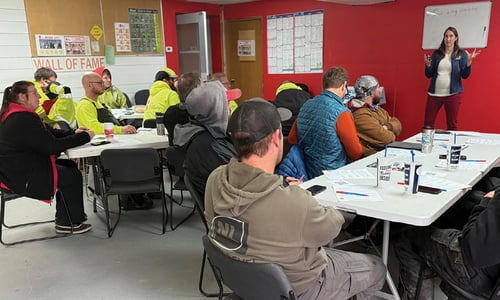
After-action reviews address this gap. When done well, after-action reviews give teams a structured way to learn from each event. Built on a straightforward process and reliable data, they support steady improvement over time. Consistent, incremental improvements can change the trajectory of an entire season.
Start with the good stuff
Effective after-action reviews begin by recognizing what went right and who made it happen. Strong decisions in the field, clear communication, and progress from previous events should be acknowledged first. Equally important is recognizing team members who go above and beyond, whether by staying late to complete a route, stepping in to support another crew, proactively addressing a site issue, or making sound judgment calls under challenging conditions.
Celebrating these wins reinforces the behaviors leaders want to see repeated and sends a clear message about expectations. When team members feel valued and see their contributions acknowledged, engagement increases and turnover pressure decreases. Starting reviews this way sets the tone for productive discussion and encourages honest participation.
Get to the root cause
Effective after-action reviews do not stop at surface-level observations. A missed area may result from a gap in the site plan, limited visibility, or unclear expectations. A delay may be tied to dispatch timing, routing, equipment availability, or fatigue. Without identifying the root cause, corrective actions tend to be temporary.
This process begins with an objective view of the current state. What happened? Under what conditions? What decisions were made at the time? Service tickets, weather data, attendance records, GPS information, equipment data, and incident reports keep the discussion grounded in facts.
Equally important is defining the desired state. Faster response. Fewer callbacks. Clearer communication. More consistent material performance. Without clear expectations, improvement efforts lose focus.
After-action reviews are effective because they are repeatable. Not every issue requires a major change. Refining dispatch timing. Updating a site map. Adjusting application timing. Coaching one operator. Improving documentation for a single ticket.
These incremental improvements compound over time. When applied consistently, after action-reviews become more than an operational task. They become a leadership practice that strengthens communication, reinforces professionalism, improves safety, supports retention, and builds stronger teams. In an industry defined by changing conditions, organizations that learn deliberately and consistently are better positioned to perform at a high level throughout the season.
Under the microscope
1. Service tickets
Meaningful reviews require accurate information, and service tickets provide that foundation. Service tickets document the work performed, site observations, and any additional scope requested. They also capture when areas are missed or require additional service. They define when the work occurred and the conditions under which it was performed. When completed consistently, they create a dependable record of operational performance.
Reviewing tickets collectively reveals patterns that individual tickets do not. These patterns shift the discussion from isolated outcomes to system-level issues. The focus moves to understanding why issues recur and what needs to change to prevent them.
2. Material performance
Material use is one of the most critical and most mismanaged aspects of snow operations. After-action reviews should evaluate performance, not volume alone. Rather than only asking how much material was applied, effective reviews ask whether the material performed as intended.
That requires looking at application timing alongside air temperature, pavement temperature, humidity, and event progression. A callback may result from rapidly changing conditions, residual moisture, or pavement temperatures dropping faster than anticipated, not from a lack of material. Higher application rates do not guarantee better outcomes when timing and conditions are misaligned.
When teams review service tickets, GPS data, and weather information together, they gain a clearer picture of what happened in the field. This reduces assumptions and improves judgment during marginal events, where timing matters more than volume alone. Making material performance a standard part of after-action reviews strengthens consistency, improves defensibility, and supports responsible material use without compromising service expectations.
3. Staffing
Attendance also affects execution. Late call-offs, fatigue during extended events, and reliance on a small group of individuals can impact response times. Routes that consistently run behind schedule are not always poorly planned. In many cases, staffing depth is the limiting factor. Including attendance trends in after-action reviews helps leaders identify where schedules, availability expectations, or staffing models need adjusted.
4. Equipment and routing
Equipment performance and routing decisions directly affect service quality and cost. GPS data adds clarity by showing where equipment operated, how long it ran, idle time, and whether routes matched the plan. When reviewed alongside service tickets, GPS data confirms what occurred in the field and reduces reliance on assumptions. Layering this information with repair history often highlights training needs or maintenance gaps.
5. Incidents and safety
Incident reports and safety assessments are another critical component of effective after-action reviews. Near misses, slips and falls, property damage, and equipment incidents often reveal risk factors. Reviewing these incidents helps teams understand how conditions, timing, site layout, or communication increased exposure.
Safety assessments add value by identifying site-specific hazards, including drainage issues, lighting gaps, pedestrian routing conflicts, pile placement concerns, and traffic flow challenges. Addressing these risks through planning and site adjustments helps prevent repeat incidents and reinforces a proactive safety culture.
Erik Dyba, CSP, ASM is the Specialty Services Operations Manager at the Bruce Company of Wisconsin, a SIMA Foundation board member, and a Wisconsin Salt Wise subject matter expert. Contact him at EDyba@brucecompany.com.