

Michael Wagner, CSP, ASM
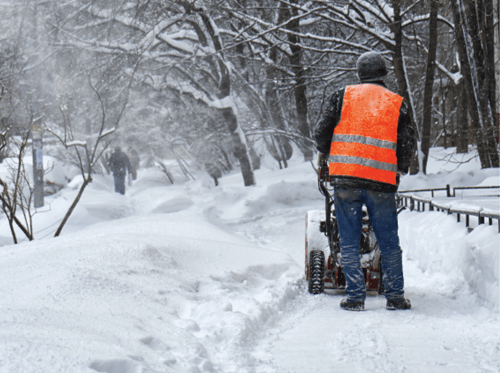
There are many operational characteristics to consider to guide your walkway equipment selection
Choosing the right tools for working on walkways and sidewalks can seem straightforward, yet the selection process presents several challenges. Many factors influence your operations, including tool and equipment selection, familiarity with the property or site, and the most efficient and safest methods to get the work done properly. Below are operational characteristics to consider that will guide your equipment selection.
Know the site
When you begin planning your winter operations, walk the property with your site contact, whether that’s a property manager or ownership team employee. This is a critical step because you will have a chance to learn about the property, as well as the client’s expectations, concerns and preferences. These can include:
- Where you place snow piles or move snow
- What obstacles you may face (e.g., fixtures, stairs, ramps, docks)
- If there are pre-existing safety concerns or pavement/turf damage
- When the work will get performed, how quickly, and the facility’s hours of operation
This is the perfect time to take photographs, make notes, and discuss an operational plan with the client so they understand your expectations. For instance, you don’t want to arrive to perform walkway services when there is substantial foot traffic in certain locations or at specific times. Plan the work with the client, because this will help you determine the proper equipment to use, how many people you need working, and when the work must be completed.
Also, take note of how much room you have and the types of areas where you’ll be working, so that you can answer the following questions:
- How am I going to efficiently and safely shovel and move snow to the proper location?
- Is walkway equipment such as ATVs, UTVs, or ride-on equipment effective for the property?
- Can we move snow with shovels or equipment to the parking lots or roadways for clearing?
- Where are the top priority emergency entrance and exit routes, and what tool or equipment should we use to clear them?
Remember, the work will get done the most efficiently and effectively with proper planning. If you miss this step or don’t invest the time accordingly, you’re setting your team up for unnecessary challenges or service failure!
Knowing your options
While walkways and sidewalks may be thought of as “easy” in terms of knowing what to use and how to clear them, there is a detailed process of planning, selection, procurement, and safety that goes behind it. Since walkways are a higher risk area, and the safety of pedestrians, employees, and guests of the property are a top priority, it is vital to know how to properly plan so you can get the work done effectively!
ATVs and UTVs
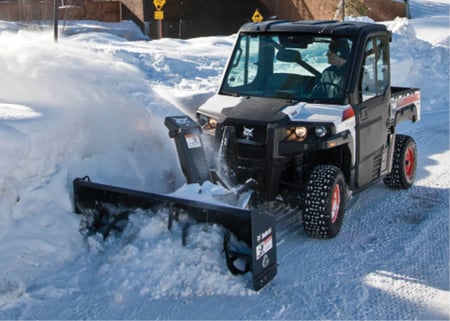
ATVs and UTVs are best used where you can fit snowplows with widths of 4 feet and up. Typically, these types of equipment are best used for trails and walkways with long runs, and areas where snow can be cleared to the side quickly and not piled in hard-to-access areas. ATVs and UTVs can be equipped with straight or V-Plow blades, depending on the need and width of the paths you are clearing.
SAFETY TIPS!
- Make sure the equipment is equipped with hazard or warning lights, headlights, stop lights, and strobe lights if possible.
- When working with equipment on walkways and paths, observe your surroundings, and mark off potential pedestrian access points to reduce foot traffic and the possibility of an incident until the area is cleared.
Backpack/Walk-behind snow blowers
Handheld or backpack blowers are ideal for clearing light dustings of snow, while walk-behind snowblowers are great for smaller walkways that bigger equipment can’t access but where a lot of snow needs to be cleared quickly. Single-stage blowers should be used for lighter to moderate snowfall, and 2-stage snowblowers should be used for heavier, wet snow.
SAFETY TIP!
- Direct chutes in the proper direction of where you want to move the snow, and never put your hand, arm, feet, or legs near the paddles or rotary assembly! Read the owner’s manual for safety precautions prior to use.
Shovels
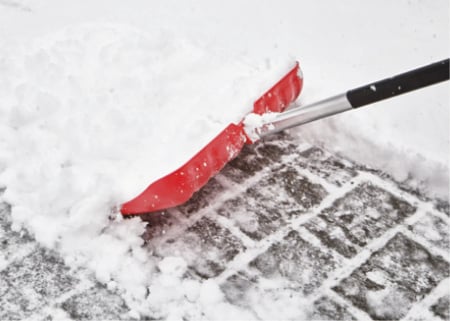
Shovels are most effective where detailed work is needed, such as near building entrances and doors, pavement transitions near roadways, near pedestrian travel paths, or on and around obstacles like stairs, railings, ramps, docks and fire hydrants.
A selection of shovels is available, including push, scoop, wheeled and spade. Whether you are pushing light snow, scooping heavy snow, or chipping ice, you must choose the right shovel for the job.
Push and Walk-behind equipment
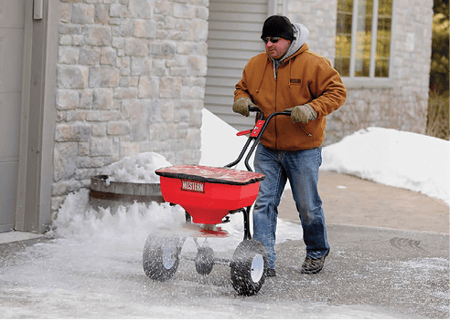
Granular and liquid spreading equipment, such as walk-behind spreaders and sprayers, are highly mobile pieces of equipment that can be used almost anywhere.
Make sure the equipment is set to the proper calibration and don’t over- or under-apply the chemical. Read the manufacturer directions prior to use.
Ride-on equipment
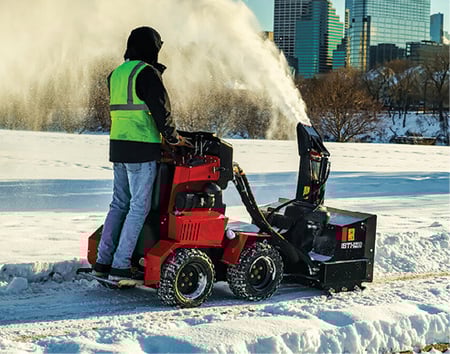
Ride-on equipment is best used on moderately sized walkways. This type of equipment utilizes attachments, such as plows, blowers, brooms and liquid or granular spreaders to properly perform the work.
SAFETY TIP!
- Make sure you are fastened into the equipment, wear the proper PPE (including helmets, goggles and ear protection) and are visible to any pedestrians and vehicles that may be near the work area.
Large equipment
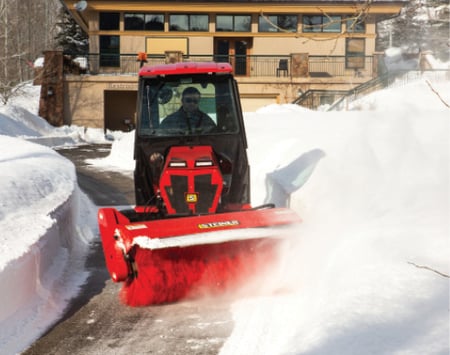
For larger, heavily constructed walkways and sidewalks, heavy equipment like skid steer and track loaders or tractors may be necessary. While there are not as many use cases, it is still important to know your options—including knowing whether the walkway can sustain the weight and size of the equipment.
SAFETY TIP!
- Make sure all pedestrian and vehicle routes are clearly marked or blocked off prior to work being performed. Use all warning and hazard lighting to keep yourself and others safe!
Michael Wagner, CSP, ASM is Director of Operations at Designscapes Colorado Inc. Contact him at 303-328-5554 or mwagner@designscapes.org.
Related Articles
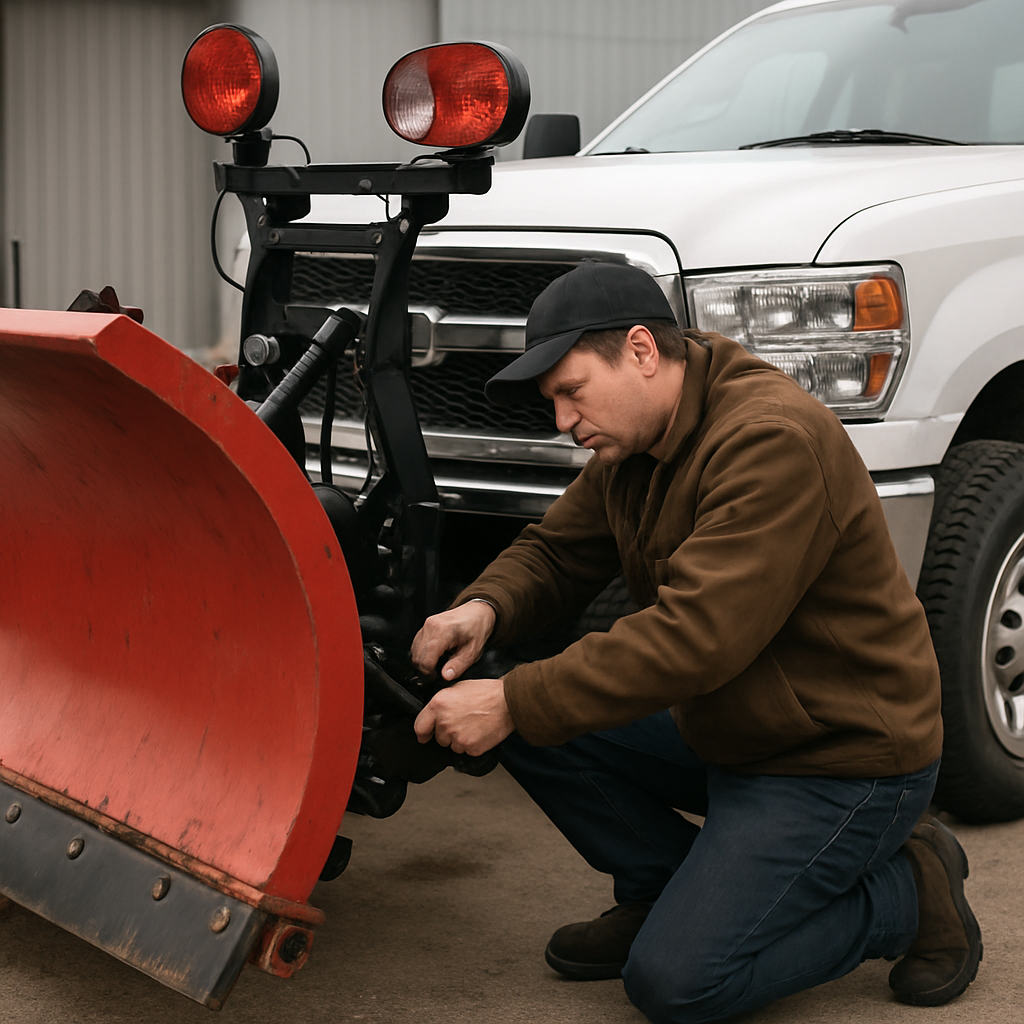
Winter's coming ... is your snow fleet ready?
Operations
Plan now to make sure your snow fleet is ready before you need it
.png?width=1920&height=1080&name=CONTENT_101_INCIDENT%20REPORTINGBPS_final.pdf%20(3).png)
Snow management incident reporting
Operations
Take steps to protect snow removal assets from theft
Business
Risk Management
Take proactive steps to protect equipment from theft