
Ken Boegeman, Jr., CSP, ASM
Have a clear, repeatable process in place to manage snow and ice risk in real time
By February, most snow and ice operations are deep into the season. Crews are tired, storms are stacking up, and conditions are changing by the hour. This is also the point in the season when risk is at its highest—not because contractors stop caring, but because volume, fatigue, and urgency collide.
Slip and fall claims, property damage, and emergency service requests tend to spike during this stretch of the season. When these issues arise, naturally your first priority is to remedy the situation immediately. After the situation is addressed, what you do in the following 24 hours can determine whether an issue becomes a minor operational headache or a major legal and insurance problem.
Managing risk in real time is not about reacting emotionally or scrambling to explain what happened later. It is about having a clear, repeatable process that starts the moment an incident is reported.
Why the first 24 hours matter
The moment an incident is reported—whether it is a slip and fall, a damaged curb, or an emergency service request—the clock starts ticking. Conditions change quickly, and details are easy to lose if they are not captured right away.
Your goal in the first 24 hours is not to assign blame or defend your company. The goal is to preserve facts. That means documenting what you knew, what actions were taken, and what conditions existed at that moment in time.
Managing claims, damage, and emergency calls
Not every incident becomes a lawsuit, but every incident should be handled with the same level of discipline. The same process should apply whether someone slips on a sidewalk, a plow damages a curb, or a client calls requesting emergency service outside the normal scope of work. Inconsistent responses from one site to another or one storm to the next create gaps that attorneys and insurance carriers notice later.
Emergency requests deserve special attention
Emergency requests deserve special attention, not because they are the only situations that matter, but because they are where even strong systems are most likely to break down. Emergency requests refer to unplanned, reactive callouts that fall outside normal contract triggers or scheduled service—not routine snow removal performed as part of regular operations.
Emergency services should never be documented the same way as routine service. They require their own logs, time stamps, and notes explaining why the service was needed and who authorized it. Clear separation between routine and emergency work helps explain real-time decisions if questions arise months or years later.
Build your post-incident playbook before you need it
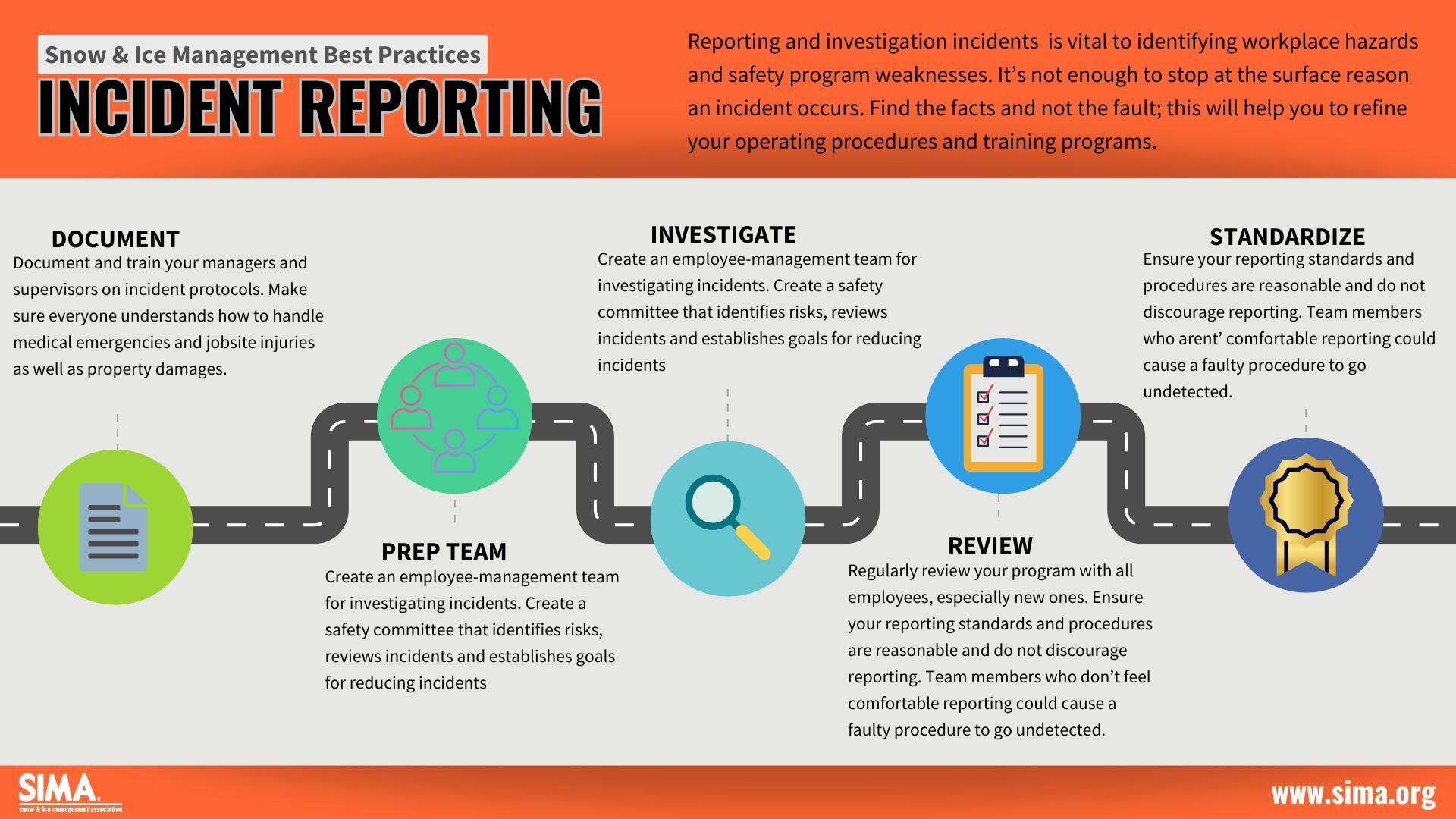
The worst time to decide how to handle an incident is in the middle of one. A post-incident playbook gives your team clarity under pressure. The first 24 hours checklist focuses on capturing facts immediately, while the post-incident playbook ensures the incident is managed consistently from start to finish.
Your playbook should outline who documents what, where records are stored, when leadership is notified, and how follow up communication is handled. It should be simple, repeatable, and used every time.
Forecasts and post-event summaries matter
Archived forecasts and post-event summaries provide critical context. They show what was known when real-time decisions were made, not what became obvious later. Pairing service logs with forecast data helps demonstrate that actions taken during a storm were reasonable based on actual or forecast conditions.
Risk doesn't wait
February storms test even the best operations. The companies that come out strongest are not the ones that avoid incidents altogether. They are the ones that manage them well in real time. Risk does not wait until the season is over. How you respond during the storm often matters more than what you say months later.
Dispatchers: Logging emergency requests effectively
Dispatchers are often the first point of contact when something goes wrong. How emergency requests are logged sets the foundation for everything that follows. Every emergency request should include:
-
Date and time of the call
-
Who made the request
-
Exact concern reported
-
How the request was handled
If the service falls outside the original contract, that should be noted clearly. Emergency requests should also be tied to weather conditions at the time of the call. Was there active precipitation, a refreeze, or rapidly changing temperatures? These details provide important context later.
Supervisors: Onsite steps after a reported incident
Supervisors play a critical role once an incident is reported. If you are dispatched to a site, your responsibility is to observe and document, not to speculate.
Document surface conditions, lighting, signage, and weather upon arrival. Record what mitigation steps were taken and when. If additional services were performed, log them as a separate occurrence.
Do not attempt to alter, filter, or “clean up” the facts. If a mistake was made, or if something feels uncomfortable to document, it is still important to record it accurately. Always assume there is existing documentation, including photos or video, that reflects the actual site conditions at the time of the incident.
If your report is later shown to be incomplete or misleading, it can seriously damage your defense. If the situation progresses to litigation, your attorney will be far better positioned with a complete and honest account of what occurred.
Know when to involve management
Not every incident requires executive involvement, but some should never stay at the field level. Clear escalation triggers protect both your company and your team.
Consider automatic escalation when an incident involves medical treatment, emergency responders, significant property damage, or allegations of negligence. Incidents outside the normal contract scope should also be reviewed promptly.
Executives: When to involve your carrier or legal team
Early notification allows your insurance carrier or legal counsel to guide next steps and help preserve coverage under your policy. Delays in reporting can create unnecessary exposure.
Most insurance policies also require incidents to be reported promptly. If you are unsure whether an incident needs to be reported, contact your insurance carrier right away and discuss the situation with them. It is far better to ask early than to find out later that a reporting requirement was missed.
Post-Incident Playbook Checklist

Use this checklist anytime there is a reported incident, complaint, or emergency request.
1. CAPTURE THE REPORT
-
Date and time the incident or request was reported
-
Who reported it and how it was reported
-
Exact concern as stated, not assumptions or interpretations
2. DOCUMENT CONDITIONS
-
Weather conditions at the time of the report
-
Observed or reported surface conditions
-
Lighting, signage, and access conditions
-
Any active precipitation or refreeze conditions
3. LOG SERVICES PERFORMED
-
Services completed before the incident
-
Services completed after the incident
-
Time services were performed
-
Who performed the work
4. PRESERVE COMMUNICATIONS
-
Save call logs, emails, and texts related to the incident
-
Keep internal notes separate from client communications
-
Do not edit or overwrite original records
5. DETERMINE ESCALATION
-
Does the incident involve an injury?
-
Were emergency responders involved?
-
Is there significant property damage?
-
Was the request outside contract scope?
6. NOTIFY WHEN REQUIRED
-
Management or ownership
-
Insurance carrier or broker, if thresholds are met
-
Legal counsel, if advised
7. ARCHIVE SUPPORTING RECORDS
-
Service logs tied to the incident
-
Emergency request documentation, if applicable
-
Forecasts and post-event summaries
-
Incident reports and follow-up notes
8. FOLLOW UP CONSISTENTLY
-
Assign responsibility for client communication
-
Track any additional services or mitigation steps
-
Close the incident internally only after documentation is complete
Ken Boegeman is a snow & ice industry consultant and President of SG Advantage and Swinter Group. He has over 13 years of experience as a snow and ice slip-and-fall expert and more than 30 years in the snow industry. Contact him at kenb@swintergroup.com.
.png?width=1920&height=1080&name=CONTENT_101_INCIDENT%20REPORTINGBPS_final.pdf%20(3).png)