

Improperly managing assets can negatively impact profitability
Why equipment depreciation matters for snow contractors
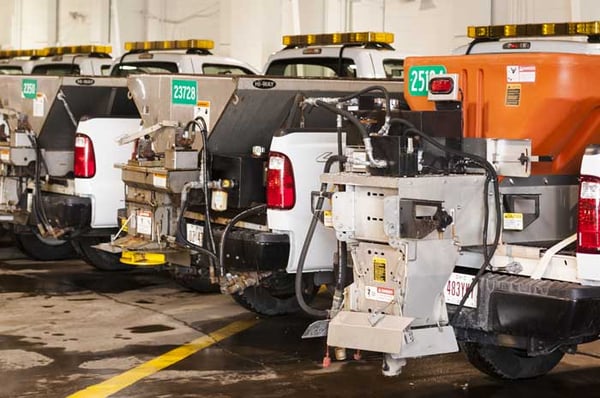
In the snow and ice management industry, heavy equipment is the lifeblood of the operation. From skid steers and loaders to heavy-duty trucks with pusher boxes, getting the job done requires serious machinery. But while the physical wear and tear on these assets is obvious, there is a hidden financial wear and tear that many contractors overlook: depreciation.
Understanding and planning for equipment depreciation is one of the most critical steps in transitioning from running a seasonal snow "job" to managing a profitable, long-term business.
What is depreciation?
At its core, depreciation is an accounting method that spreads the cost or value of a tangible asset over its useful life, rather than taking the entire expense in the year it was purchased. In simpler terms, it reflects the steady loss in value your equipment experiences over time.
When you purchase a new asset, like a loader, you do not record the full cost as an expense on your Profit and Loss (P&L) statement in the month of purchase. Instead, you spread the cost over the asset's useful life. First, you estimate the salvage value—the price you expect to sell the loader for when you are finished using it. Subtract the salvage value from the original cost. The resulting amount, known as the depreciable base, is then divided over a set schedule (e.g., 10 years or 120 months) to calculate the monthly depreciation expense (or overhead) recorded on the P&L statement.
While the math is simple, the long-term impact on your business is profound.
Here is an example of calculating straight-line depreciation:.png?width=789&height=610&name=STRAIGHT%20LINE%20(3).png)
Why tracking depreciation matters for the future of your snow company.
1. It prevents you from bidding blindly
A common mistake among growing contractors is running their business based on their bank account balance rather than true costs. If you bid a commercial plowing contract based only on the direct costs of labor, salt, and fuel, your margins will look fantastic, that is, until you realize you haven't accounted for the cost of "using up" your machinery.
Depreciation is an indirect, overhead expense that must be subtracted from your gross margin to find your true net profit. If your pricing does not cover the monthly depreciation of the equipment dedicated to a site, your company is slowly going out of business every time you turn the key in the ignition. Factoring depreciation into your long-term estimating ensures that when a truck eventually dies, you have actually made enough profit to buy a new one.
2. Guarding against the "Silent Profit Killer"
As a snow business scales, it is tempting to buy fleets of new equipment to take on bigger contracts. Scaling too quickly can lead to a massive, sudden spike in your monthly depreciation overhead. Because snow equipment often sits dormant for three-quarters of the year but continues to depreciate every month, taking on too much new equipment at once can erode your net profit across the entire calendar year.
3. The power of the "Fall Off"
When you track depreciation on a schedule (e.g., 3 years for a snow blower, 5 years for a plow, 7 to 10 years for a loader), you know exactly when an asset reaches the end of its financial life. At the end of its schedule, the asset is considered worthless from an accounting perspective.
However, if you have performed preventive maintenance, the machine may still operate perfectly well. When an asset "falls off" the depreciation schedule but remains in the field, it no longer subtracts from your bottom line. This is the sweet spot for a snow contractor: utilizing fully depreciated assets allows you to generate revenue without the added overhead cost, instantly boosting your net profitability.
4. Strategic fleet cycling
Finally, projecting your long-term depreciation allows you to strategically cycle your assets. If you know that three of your plow trucks are going to "fall off" the schedule next year, you can plan to slowly cycle in new asset purchases. Staggering your capital expenditures ensures that you never have a fleet consisting entirely of brand-new (highly depreciating) equipment, keeping your cash flow and net profit stable and predictable year over year.
The bottom line
Anyone can buy a plow and push snow, but surviving the harsh realities of the winter service industry requires financial discipline. By tracking depreciation accurately, you ensure your equipment pays for itself, your bids reflect reality, and your business is built for long-term, sustainable growth.
Related Articles
All-season snow equipment approach
Operations
Tips on how to make your equipment a steady contributor to performance year-round
Minimize incidents with solid reporting policies
Risk Management
Proactive planning and solid policies can help minimize incidents

Blueprint for success
Operations
Fail-safing can ID failure points and bottlenecks that negatively impact the customer.