

David Lammers
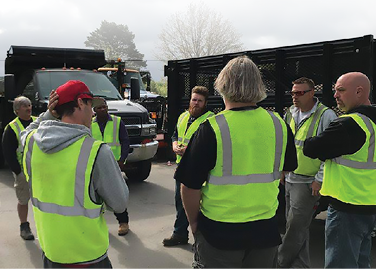
Structuring your snow team is crucial for business success
The success of a snow management business hinges on more than just the equipment or technology it uses — it’s about the team that powers the operation, from the frontline workers braving the elements to the office staff ensuring everything runs smoothly. Structuring your team effectively is crucial for building resilience, maintaining morale, and achieving peak performance throughout the season. Here’s how to structure your snow team for success:
Front line to front office
A well-structured business operates like a finely tuned machine, with every team member understanding their role and responsibilities. Successful snow management companies align their operations into clear divisions:
Front-line crew: Plow drivers, salt truck operators, and shovelers who ensure sites are safe and accessible. Their work is physical and requires real-time communication and problem-solving.
Supervisors: On-site leaders who coordinate crews, ensure quality control, and maintain safety standards.
Operations team: The backbone of logistical planning, responsible for scheduling, routing, equipment maintenance, and weather monitoring.
Customer relations: The point of contact for clients, handling updates, complaints, and satisfaction metrics.
Leadership: The decision-makers who drive strategy, hire key personnel, and manage finances.
A cohesive structure allows each layer to support the others, ensuring no aspect of your operation is left to chance.
Defining an "X" employee
What makes an ideal team member, or what we call an “X” employee?
Dependability: Has a strong work ethic. Always shows up even in the worst conditions.
Adaptability: Resilient under pressure, they thrive in a fast-paced, unpredictable environment.
Teamwork: Works well with others and communicates effectively. They’re eager to learn and are committed to safety.
Pride in work: Takes ownership of their responsibilities and delivers quality results.
Problem solver: Can think on their feet when challenges arise.
Who's responsible for hiring?
Hiring the right people is one of the most critical aspects of structuring your team. At many companies, this responsibility is split between different people:
Human Resources (HR): Handles recruiting, interviewing and onboarding processes.
Operations managers: Evaluate candidates for technical skills and team fit.
Supervisors: Often have the final say, since they work most closely with new hires.
Clearly defined roles in the hiring process prevent miscommunication and ensure every hire meets company standards.
Screening & background checks
Your team is only as strong as its weakest link, so vetting is critical:
Background checks: Review driving records for equipment operators and criminal histories where necessary.
Reference checks: Speak with previous employers to verify skills and work ethic.
Skill assessments: For technical roles, test proficiency in plow operation or equipment handling.
Hiring strategy: Grow or acquire?
Do you grow talent from within or hire experienced professionals? Both strategies have merit. Training and promoting from within fosters loyalty and deepens institutional knowledge. External hiring brings fresh ideas and skills to your team, especially for specialized or leadership roles. Ideally, a blend of both ensures a balanced workforce.
Continuing education
Investing in your team’s development pays dividends in loyalty and expertise. Offer:
- Certifications for equipment operation or safety.
- Leadership training for supervisors.
- Workshops on customer service or new technology.
Retaining your best employees
Keeping top talent requires intentional effort:
Competitive pay: Match or exceed industry standards.
Recognition: Celebrate achievements and milestones.
Growth opportunities: Provide clear paths for career advancement.
Open communication: Foster a workplace where employees feel valued and heard.
“Read the room”: Younger workers may value flexibility, technology and work-life balance more than previous generations. Adapting to these preferences can attract and retain a diverse workforce.
Prevent poaching by competitors or clients by building a culture that employees don’t want to leave.
Succession planning
Planning for the future is vital. Identify potential leaders within your team and groom them for key roles through mentorship, training and incremental responsibility. This ensures your business remains strong, even as employees move on. Are you grooming your successor? The answer should always be yes. A strong team thrives on vision and leadership continuity.
The bottom line
Building winning teams isn’t about filling positions — it’s about creating a culture of excellence and opportunity. With intentional structuring, clear communication, and investment in people, your snow management business can weather any storm.
Seasonal workforce strategy
Seasonal workers are the backbone of the snow industry, but acquiring and retaining them can be challenging. Here’s how to stay ahead:
- Early recruiting: Start outreach months before the first event. Use job boards, social media and community connections.
- Incentives and referrals: Referrals can be a goldmine for finding reliable employees. Incentivize current workers to recommend candidates by offering bonuses for successful referrals. This not only builds your workforce but also strengthens camaraderie among your team. Consider offering bonuses for signing up early and/or staying through the season.
- Reliable pay: Ensure timely and competitive compensation to build trust and loyalty.
- Flexibility: Accommodate other commitments (e.g., school, second jobs) with flexible shifts.
- Engagement: During low-snow winters, keep seasonal workers engaged by offering cross-training or alternative tasks, such as maintenance or landscaping work.
David Lammers is former president and CEO of Garden Grove Commercial Grounds & Snow Management.
Related Articles

Building a culture of accountability
Business
A high-accountability workplace will have better engagement and a high level of trust.
-3.png?width=1080&height=1080&name=Untitled%20design%20(2)-3.png)
High-performing culture
Business
3 key steps to creating a high-performing culture in your snow and ice business.
Keeping pace
Business
Prices must be high enough to cover the cost of production and overhead burden.