

Patrick White
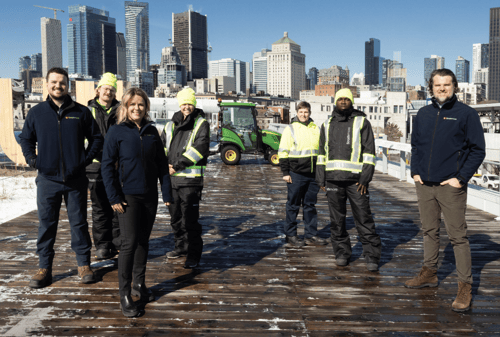
Core values guide Montreal-based snow company Strathmore
A lot has changed at Strathmore, a Canadian snow and landscape service company, since it was founded in 1963 by Elmer Milligan. What began as a small company in Quebec is now owned by his granddaughter, Jessica Milligan, CSP; and under her direction, Strathmore now services commercial properties from coast to coast across Canada. But even with impressive growth, and even in its third generation of family ownership (see sidebar), one thing hasn’t changed: a commitment to a set of core values that guides the way the Montreal-based company works.
“It wasn’t really something that was pushed or promoted in the family,” Milligan says of her decision to purchase Strathmore from her father, Danny. That happened officially in 2024 after a six-year process. “My two brothers (Gordon and Conor) and I both got into it because we saw the opportunity to continue building the legacy and to really work according to our own values. I worked a couple of years in other jobs, and I said, ‘If I’m going to do this, I’d rather do it with my family’s values than be implementing somebody else’s.’ ”
Valuing diversity

Milligan says the company is “very, very open to diversity.” At any given time, Strathmore team members may represent 30 or more nationalities. “We always tell new team members: ‘You might work with people who have different points of view, different life experiences, different backgrounds; and as long as you’re committed to putting the company values first, you’ll be able to get along.’ ” That sentiment exemplifies the company’s commitment to creating an environment where different viewpoints can be heard and put forward. “And that’s only going to help innovation and understanding our customers’ needs better,” she feels.
Being committed to diversity also means a commitment to helping all employees succeed. On a practical level, that might mean being sure employees have the translation tools to overcome language barriers. But Milligan says the biggest component is creating a “good work environment for people, treating them well, and letting them know that they can progress and develop within your company. That it doesn’t matter where they come from. People respond to that. There’s a big amount of loyalty in our team because of that.”
As a woman-owned company, Strathmore is “pretty unique in snow,” Milligan notes. And that sets the tone for the company’s makeup as a whole. “We have 25 percent women in our workforce; and the industry average for landscape is 8 percent and for snow removal it’s 4 percent,” she says. “There’s something around our openness to diversity that helps build a team where people feel comfortable working.”
Milligan says that valuing diversity has proven to be an asset not only to how the company services customers but also to finding employees in a challenging labor environment. “We’ll give opportunities to anyone who aligns with our values and will work alongside them, coach them, train them and help them develop their job into this career. It makes a big difference.” She’s proud of the loyalty that team members have for Strathmore, as well as the “spirit of goodwill” among former employees who have moved on to other careers or returned to their home countries to do some of the things they learned on the job.
Welcoming talent wherever it may be found has helped the company attract key leaders from other industries and those working for huge companies who are attracted by the ability to make a direct impact in helping Strathmore grow. “We’re getting some external expertise that is really helping us right now,” she says.
Climate consciousness
.png?width=400&height=236&name=2018.05.17__(104).png)
Strathmore also places a priority on providing the most environmentally responsible services possible. In the beginning, clients were just happy to hear about Strathmore’s efforts. But as more started receiving questions about their own corporate environmental impacts, “and their financing lenders started looking at their ESG (environmental, social, and governance) scores, they became much more interested. We can come to them and say, ‘Here’s what we’re doing on your property, and we’ve been doing it for X number of years. It gives them a step up in their ESG reporting,” says Milligan. “We’ve always wanted to be partnered with our clients and responding to the challenges they have. When they were starting to look for environmental certification, LEED or other programs like that, we wanted to see where we could align.”
Strathmore has also taken steps to quantify its own environmental impact, including calculating their greenhouse gas emissions. The company has been certified for two years through EcoVadis, an international governing standards board similar to the International Organization for Standardization (ISO) but specifically for ESG.
“The big thing with ESG, I think people don’t always understand it, is it’s about transparency. It’s not about necessarily being the greenest or the most diverse, but it’s about being transparent about where you’re at and the measures that you’re taking to improve. We have some specific objectives that we try to work toward year over year to improve our standings with EcoVadis.”
While electric equipment has become much more plentiful on the green side of the business — it started using zero-emissions lawn and landscape equipment in 2011 — “way before it was mainstream,” Milligan says there aren’t as many options in snow. But using technology to focus on good routing, planning and site maps can reduce emissions and materials, she states.
Milligan is eagerly awaiting new introductions to the snow market: “There will be some electric wheel loaders in the next two years, and mid-sized dump trucks. There’s a lot of pressure across all industries to start electrifying that category. We’ve already got our order in, so we’ll be one of the first to try and test them.”
Using the attitude that the company can’t be closed to new ideas, Milligan says that Strathmore is committed to staying at the forefront of testing environmentally friendly technologies that might not be completely proven. “We’re always willing to do it, even if it means not making as much money.” That said, she emphasizes that adopting eco-friendly products and equipment usually doesn’t carry a huge financial penalty. “Very few great solutions actually cost us money in the long run.”
Giving back
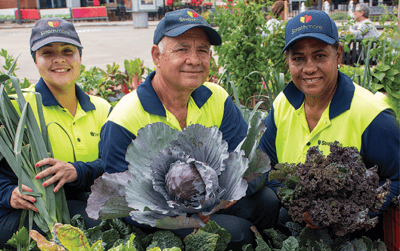
As a company with expertise in growing things, Milligan says it’s been natural for Strathmore to help grow food in the summer to help with food insecurity. “We’ve been doing urban agriculture going back to 2008 or 2009 — way before that was a buzz-word,” she says. “We care for large commercial grounds, so we started talking with clients who were open to transforming some of their gardens into vegetable gardens. In doing that, the spaces are still beautiful, and we’ve been able to donate hundreds and hundreds of pounds of food to the local food banks.”
Employees at the client property may want to get involved, and Strathmore will put on workshops about growing gardens — something unfamiliar to many in urban areas.
Strathmore also focuses its capabilities and expertise to help create and maintain gardens at palliative care centers in the communities where they work. “We want to be sure these facilities are beautiful, well-maintained places of peace. That’s been a cause that’s been pretty important to us for a long time,” she explains.
In addition to helping others, the volunteer work helps foster a sense of pride among Strathmore team members. “It gives them a connection to a bigger purpose, rather than just showing up to shovel snow or plant flowers. If you’re planting kale that’s going to help a family in need in four months, or creating this peaceful garden, that’s pretty exciting,” Milligan says.
It’s also a continuation of the family values that have guided Strathmore for generations. “My dad instilled in us that building a good business is a creative venture,” says Milligan. “You can do it beautifully, and you can make your business a real work of art.”
A smart approach to generational transitions and company growth
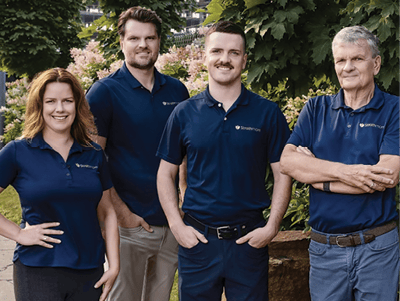
When Jessica Milligan, CSP, decided to purchase the business from her father, Danny, she says “family-wise, it was really important to us that it be done properly. We’d seen family businesses implode after a generational transition.”
They worked with outside business, tax and legal advisors that could give non-biased, neutral advice, and she advises any family business contemplating a transition to do the same: “That helped us have the harder conversations and not have them turn into fights but rather to solution-oriented conversations. By the end, everybody was really satisfied with what was happening.”
During the two-year process, Milligan emphasizes, “we made sure that everything was out on the table, and that we all understood each other’s motives. That gave my dad confidence to sell his shares — that it was the right time to do it and the right thing to do. When it came time for him to actually retire, it was a very easy decision.”
Same values on a bigger scale
Milligan and her brothers, Gordon and Conor (who serve as vice presidents), run the company. She says that the key to Strathmore’s success has been “a really strong focus on quality and providing what the customer wants. When I came in, I saw an opportunity to just keep doing that at a bigger and bigger scale.”
She says the company strives to be a premium rather than a luxury service provider, adding that their ideal customer is someone who wants really good customer service and a high-quality level of service. “Sometimes clients will tell you, ‘Oh, you’re expensive.’ We’re not expensive. We’re offering you everything your property needs. We’re not cutting corners on your behalf — we’re really giving you the solution that’s best for what you’re asking. If they want high quality and peace of mind, they can call us.” Milligan likens the approach to manufacturers, which usually have base, premium and luxury models. “We want to be meeting our clients at the premium space. That’s where we’ve focused our energy; and by staying true to that and our values, the growth has been pretty impressive.”
While Strathmore now operates across the country, it wasn’t necessarily the plan: “When the opportunities came up, we said, if we’re going to do this, it has to maintain that level of quality,” Milligan says. In many cases, existing clients have brought the company into new markets, which helped put everyone at Strathmore at ease about expanding. “We knew that we’d be able to continue doing really good quality work, and that would help us build a good quality team there,” she explains.
Milligan says Strathmore may continue to expand to new locations, as well as to grow in the locations it has moved into. “I think we’re open to both of those as long as we can do it with a really solid, committed team, putting the values first and working alongside good clients,” she says.
Team approach
Successful growth means “growing together” with its clients, vendors and employees, she says. “If our clients are moving to new cities or new buildings, they often bring us with them. Our team members can start in the field and really build a nice career, whether they want to continue working in the field or move into more of a supervisory role. We want them to feel like they can continue to develop within the company,” says Milligan. “And some of our suppliers are companies my father worked with back when he was a teenager. Anytime we deal with a supplier, we take the attitude of, ‘how do we become their favorite client?’ That means paying on time, respecting the work that they’re doing or the products that they’re supplying for us.”
Patrick White has covered the landscape and snow and ice management industries for a variety of magazines for over 25 years. He is based in Vermont. Contact him at pwhite@meadowridgemedia.com.
Related Articles

Map out processes and ID shortfalls before buying software
Business
Map processes to help choose the right tech

The real cost of chaos
Business
Fortify your processes to protect your bottom line
Future focus
Business
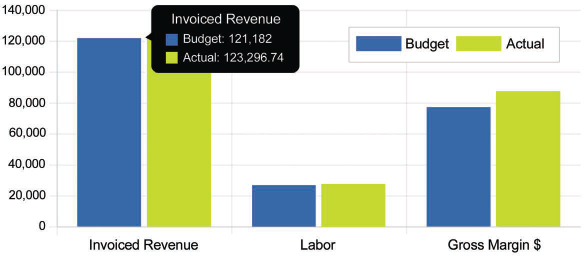
Financial planning is a starting point for navigating change in your snow business.