

Erik Dyba, CSP, ASM
Use assets across multiple service lines and perform diligent maintenance to get the most out of your equipment
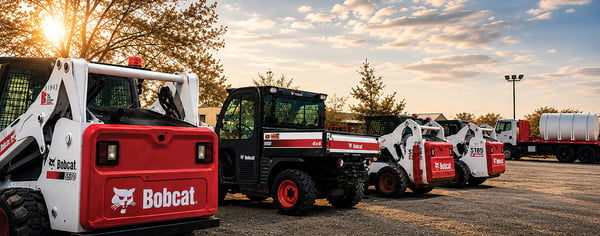
At The Bruce Company of Wisconsin, equipment is treated as a year-round asset, not something that sits idle between seasons. That mindset didn't happen overnight. It developed over time through changes in how we operate, purchase and maintain our fleet.
Today, that approach is built around consistency in equipment, disciplined maintenance and the ability to use assets across multiple service lines. When those elements are aligned, equipment becomes a steady contributor to performance throughout the year.
From silos to system
The move toward this model began with a broader operational shift. Equipment strategy was not the starting point—organizational alignment was.
Historically, our divisions operated independently, often resulting in what was described internally as a "rainbow fleet." While functional, it created unnecessary complexity in maintenance, parts and training. Moving toward more consistent equipment platforms became a natural next step as the organization aligned.
That transition was gradual. Disparate equipment was replaced with more uniform options as it reached the end of its useful life, while purchasing decisions were centralized to ensure alignment across departments and long-term planning.
Utilization as a financial lever
At its core, this approach comes down to capital efficiency. Every piece of equipment represents an investment, and how that investment is used determines its return.
"There's always a finite amount of cash flow," says Mike Koeppen, chief financial officer of The Bruce Company of Wisconsin. "You want to invest in equipment that's going to generate the greatest return, not tie that investment up in assets that only produce for part of the year."
That mindset shifts decision-making toward versatility. Equipment is evaluated not just on upfront cost, but on how consistently it can contribute.
"If we can invest in the right piece of equipment and use it year round, it reduces the cost per hour significantly," Koeppen adds. "We may have to turn it more often, but it's worth it when it's contributing to revenue instead of sitting idle."
It sounds simple, but it takes discipline to execute.
Consistency makes it work
Using equipment across multiple applications only becomes scalable when supported by consistency. Without it, increased use introduces complexity rather than efficiency.
"For it to work, it has to meet about 85% of your needs," says Joe Newport, The Bruce Company of Wisconsin's shop and fleet manager. "If you can get to 85%, you can adjust the rest. If you chase 100%, you end up with too many niche setups."
That philosophy allows equipment to remain flexible. Instead of being locked into a single purpose, assets can move between departments as needs shift.
Many organizations struggle here because it requires giving up individual preferences in favor of consistency. That tradeoff is often where progress stalls.
In the shop, that consistency drives efficiency. When equipment platforms are aligned, technicians become faster, parts inventory is simplified, and onboarding becomes easier.
"When you're working on the same equipment over and over, you become more efficient," Newport says. "The tech knows what it needs and how to fix it."
Reducing variation improves speed, reliability and overall performance. But every piece of equipment doesn't need to fit this model, and trying to force it usually creates more problems than it solves.
From utilization to reliability
Increased use places greater demand on equipment, making maintenance discipline critical. Without it, the benefits are quickly lost.
At The Bruce Company of Wisconsin, this required a shift from reactive repairs to proactive maintenance.
"We've gone from about 30% maintenance and 70% repair work to 70% maintenance and 30% repair," Newport says.
Equipment is evaluated more thoroughly when it enters the shop, with the goal of preventing issues rather than simply addressing immediate failures.
"At the end of the day, we make money by keeping crews producing," Koeppen adds. "The less downtime we have, the more revenue-generating work we can complete."
Practical application in the field
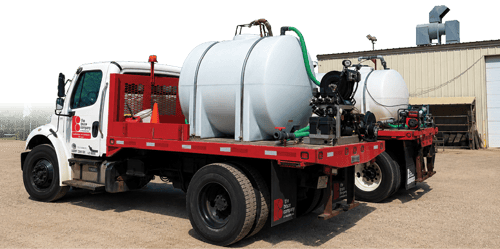
Equipment is selected and configured with versatility in mind. In some cases, that means eliminating unnecessary transitions. For example, water trucks that were once converted for winter use are now maintained in a configuration that allows for a smoother transition into brine application, reducing downtime and improving efficiency.
That same thinking applies to smaller equipment. Units like Z-Sprays, traditionally used for herbicide and pesticide applications in lawn care, are also used for brine application on walks. By aligning components such as pumps and spray systems, the transition between seasonal uses becomes seamless while also providing redundancy for parts and maintenance.
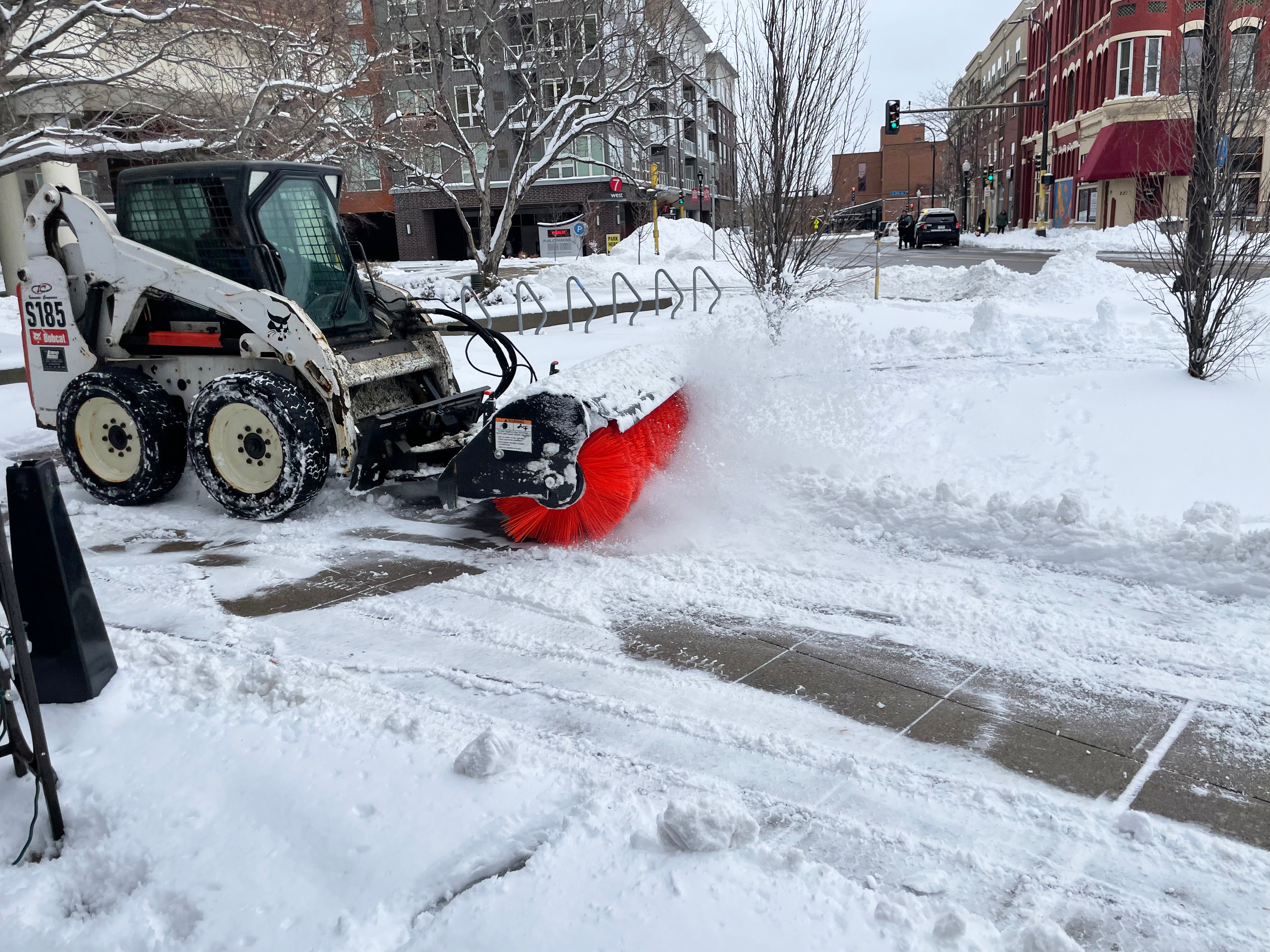
Other equipment naturally supports this structure. Skid steers remain one of the most versatile assets in the fleet due to their ability to operate in a wide range of conditions.
Looking ahead
The pressure on equipment costs, labor availability and operational efficiency will continue to increase. Companies that treat equipment as a strategic asset within their operating model will be better positioned to adapt.
When supported by consistency and maintenance discipline, this approach improves financial performance, increases flexibility and builds a more reliable operation.
Implementation considerations
Adopting a year-round fleet approach requires more than using equipment more often. Without the right foundation, increased use can lead to more breakdowns, rather than better performance and efficiency. The right approach depends on the business' structure and the services it provides. Some things to consider:
- The most effective path is to simplify first, then scale.
- For smaller or growing companies, the approach should be measured. Align equipment investments with workload and financial capacity.
- Start by establishing equipment standards that meet the majority of operational needs. Build a consistent maintenance program. Align purchasing decisions across the organization. Once those elements are in place, utilization can be expanded with confidence.
- A disciplined fleet strategy also recognizes when not to own. Highly specialized equipment used occasionally is often better sourced through a service partner, a subcontractor or a rental. This avoids tying up capital in underutilized assets while still allowing the work to be completed efficiently.
Erik Dyba, CSP, ASM is the Specialty Services Operations Manager at the Bruce Company of Wisconsin, a SIMA Foundation board member, and a Wisconsin Salt Wise subject matter expert. Contact him at EDyba@brucecompany.com.
Related Articles
Keep sales, operations, and contracts in sync
Operations
Aligning sales, operations, and admin is mission critical.

Blueprint for success
Operations
Fail-safing can ID failure points and bottlenecks that negatively impact the customer.
Subcontractor playbook
Operations
Outsourcing to trusted partners can help with business growth