

JP Sanieski, CSP, ASM
If you want to scale, protect your company, improve margins, win better customers and run cleaner events, technology must be part of your snow operation
Snow and ice management has changed over the years. The concept is still the same, but the parameters of what is needed to complete a season have evolved a great deal. What used to be built on radios, gut instinct, paper route sheets, and "we'll figure it out when it starts snowing" is no longer enough. Today's customers expect more. They want speed, transparency, documentation and confidence their properties are safe before they even arrive on-site.
Contractors who still rely only on old-school methods will always be fighting uphill. The contractors who embrace technology are building stronger operations, protecting margins and winning better clients.
Technology in winter services is no longer a luxury. It is a necessity.
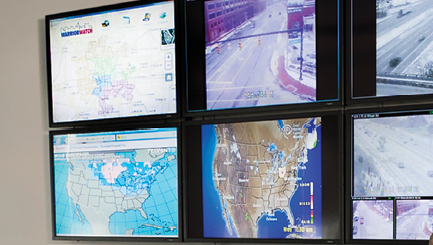
1. Weather intelligence wins storms before they start
Every storm begins with a forecast, but not every contractor uses forecasting the same way. Looking at a weather app on your phone is not weather management. Professional operations use multiple forecasting sources, radar tools, pavement temperature models, snowfall timing windows and live storm tracking. Why? Because timing is everything. Knowing the difference between rain changing to ice at 2 a.m. versus 4:30 a.m. can determine when crews mobilize, when salt is applied and whether you prevent a slip-and-fall claim. The best operators don't react to weather. They stay ahead of it.
2. Service verification protects everyone
In the past, if a customer questioned whether a property was serviced, you might rely on memory or handwritten notes. That does not hold up anymore. Modern winter operations use service logs, timestamps, route data, photos and digital check-ins. Every push, salt application, sidewalk clearing and revisit can be documented in real time. This protects the contractor, the property manager and the customer. When someone asks, "Was this lot serviced?" the answer should never be a guess. It should be backed by data and "YES, see attached document."
3. GPS creates accountability and efficiency
GPS tracking is one of the most valuable tools in snow operations. It tells you where trucks are, how long they were on site, route progress, idle time and travel inefficiencies. Without GPS, managers spend storms chasing trucks by phone. With GPS, they can manage the entire fleet from one screen. Benefits include:
-
Faster dispatching to priority sites.
-
Better route density and reduced windshield time.
-
Proof of arrival and departure times.
-
Reduced fuel waste and idle time.
-
Stronger accountability across crews and subcontractors.
When margins are tight, route efficiency matters. GPS helps recover wasted dollars that many companies never even realize they are losing.
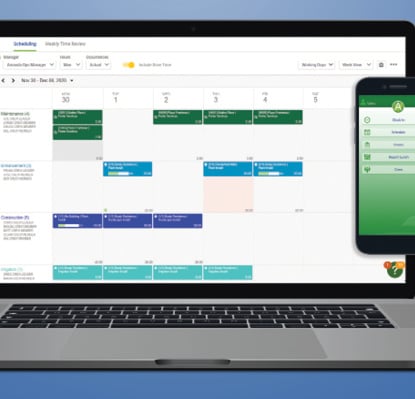
4. Timekeeping stops payroll leakage
Winter payroll can get messy fast. Overnight shifts, split shifts, multiple properties, standby hours, loaders, sidewalk crews, emergency callbacks – all of these happen regularly during a storm. Manual timecards create errors, and errors create overpayment, underpayment, frustration and lost trust. Digital timekeeping systems tied to GPS and job codes help solve this. Employees clock in accurately. Hours are assigned to the right accounts. Managers can review labor costs in near real time. The result is cleaner payroll, stronger job costing and better visibility into whether a storm made money or lost money.
5. Snow removal requires coordination, not chaos
Large storms create another challenge: snow stacking, hauling, relocations, loaders, trucking and cleanup. Technology helps manage these moving parts. Dispatch boards, live maps, equipment tracking, text updates, and internal communication tools allow companies to shift resources quickly. Instead of chaos, you get command and control. The best winter operations today look less like landscaping companies and more like emergency response centers.
6. Customers expect transparency
Property managers and facility leaders are under pressure, too. They need updates for their tenants, leadership teams and liability concerns. Technology allows contractors to communicate professionally during storms with storm alerts before events, service completion updates, photo reports, priority issue notifications and real-time status dashboards. Clients remember who keeps them informed. Communication often wins renewals as much as plowing does.
7. Data builds better businesses
Technology is not just for the storm. It helps after the storm, too. Reviewing data from the season can reveal:
- Which routes were unprofitable.
- Which trucks underperformed.
- Which clients required excessive revisits.
- True labor cost per event.
- Salt usage trends.
- Response time gaps.
That information allows smarter pricing, better staffing, stronger routing and improved service plans next season.

8. Old-school pride, new-school tools
Some people hear "technology," and think it replaces hard work. It does not! Snow still requires grit. It still requires operators in cabs at 3 a.m., shovel crews grinding in freezing wind, mechanics keeping iron alive, and leaders making hard calls under pressure. Technology does not replace blue-collar effort. It sharpens it. The best companies combine old-school work ethic with modern tools. They use experience, instinct and hustle – all backed by systems that make them faster, safer and more professional.
9. Think snow – use technology
During winter services, storms are unpredictable, but operations should not be. If you want to scale, protect your company, improve margins, win better customers and run cleaner events, technology must be part of the operation. Because in today's snow business, the companies using yesterday's methods are already behind.
JP Sanieski, CSP, ASM is director of commercial accounts for Perrone Landscaping. Email him at jp@perronelandscaping.com.