

Mike McCarron
By carefully matching contracts to equipment resources, snow contractors can avoid costly mistakes and position themselves for long-term success
In the snow and ice management industry, growth is often measured by the number and size of contracts secured each season. While winning new business is essential, successful contractors understand that not every opportunity is worth pursuing. One of the most important – and often overlooked – factors in determining whether a contract will be profitable is whether your current equipment fleet can effectively and efficiently service the property.
Too many contractors focus on the revenue potential of a new account without fully evaluating the equipment, labor and operational resources needed to meet the client\'92s expectations. The result can be increased costs, reduced profitability and unnecessary stress during winter storms.
Successful snow companies recognize a simple truth: The best contracts are the ones that match your operational capabilities and equipment resources.
Looking beyond contract revenue
A large commercial property can be an exciting opportunity. A distribution center, corporate campus, healthcare facility or shopping center may represent significant annual revenue.
A property may look attractive based on annual contract value alone, but servicing it successfully could require substantial equipment investments. Depending on the site's size and service requirements, contractors may need additional wheel loaders, skid steers, containment plows, sidewalk machines, spreaders, liquid deicing equipment or backup equipment required by the contract.
These costs can quickly change the financial picture. For example, a contractor whose fleet consists primarily of pickup trucks and plows may consider bidding on a large industrial site that requires multiple loaders. While the revenue may look impressive on paper, the cost of acquiring, maintaining, transporting, insuring and storing those loaders could significantly reduce profit margins. Growth should never be measured solely by revenue. It should be measured by profitable revenue.
Understanding seasonal equipment challenges
Unlike landscaping equipment that may be utilized for much of the year, many snow-specific assets generate revenue only during the winter months. This creates one of the biggest financial challenges in the snow industry: equipment utilization.
A dedicated sidewalk machine, for example, may be required to service one account. While that equipment can dramatically improve productivity during snow events, it may remain idle for eight or nine months of the year. Despite limited use, the contractor must still account for equipment payments, depreciation, insurance, maintenance, transportation, storage and repairs.
The same challenge applies to wheel loaders, pushers, liquid application systems and other snow-specific equipment. Before investing in specialized equipment, contractors must understand the total cost of ownership, not just the purchase price. A piece of equipment that sits unused most of the year must generate enough winter revenue to justify the investment.
It's OK to say no
One of the most valuable lessons a growing snow contractor can learn is when to say "no." The desire to win every bid is understandable, particularly in a competitive marketplace. However, chasing every opportunity can be costly if the contract requires major equipment purchases that cannot be justified by the expected return.
A contractor may excel at servicing parking lots with trucks and loaders but struggle with a property that includes miles of sidewalks requiring multiple dedicated sidewalk machines. Another contractor may perform well on small commercial sites but find itself overwhelmed by a distribution facility requiring loader support and rapid response times throughout a storm.
In both situations, the issue is not capability – it is fit. The most profitable contracts are usually the ones that align with a company's existing strengths, fleet composition and operational model.
Winning a contract is only half the battle. Consistently meeting service expectations throughout every event is what retains clients and creates long-term success.
The role of efficiency
Equipment is more than a collection of machines; it is the foundation of operational efficiency. The right equipment can dramatically reduce labor costs, improve production rates and help crews meet service requirements more consistently.
For example, a single wheel loader equipped with a containment plow may outperform several pickup trucks on a large parking lot. Likewise, a dedicated sidewalk machine can clear walkways faster and more consistently than multiple shovel crews. As labor shortages continue to impact the industry, productivity becomes increasingly important. Contractors should evaluate how equipment choices affect labor requirements and overall efficiency:
- Can our existing equipment service the property efficiently?
- How many labor hours will the account require?
- Can specialized equipment reduce labor dependency?
- Do we have adequate backup equipment available?
- Can we meet the client's service standards during major snow events?
Answering these questions before submitting a proposal can prevent costly surprises later.
Strategic growth creates long-term success
Many of the most successful snow and ice management companies didn't grow by pursuing every available opportunity. Instead, they expanded strategically, adding contracts that complemented their equipment fleet and operational structure.
As revenue increased, they gradually invested in additional equipment to support larger and more complex properties. This approach creates natural progression. A company may begin with pickup trucks servicing small commercial sites, then expand into skid steers and loaders as account size and complexity increase. Over time, a larger fleet allows the company to pursue more demanding contracts while maintaining profitability.
The key is to ensure that equipment investments support multiple accounts rather than being dependent on a single property. When an asset can be utilized across numerous contracts, ownership costs are spread over a larger revenue base, improving overall return on investment.
Profitability over prestige
Every contractor would like to land the biggest property in town, but bigger is not always better. A $250,000 contract that requires significant equipment acquisitions may ultimately be less profitable than a $100,000 contract that fits perfectly within an existing operation.
While large contracts often attract attention, the smartest contractors focus on margins, efficiency and return on investment. The goal is not simply to grow but to grow profitably. In the snow and ice management industry, sustainable success comes from aligning contract opportunities with equipment capabilities. Contractors who understand this relationship make smarter bidding decisions, operate more efficiently and build stronger, more resilient businesses.
At the end of the day, the best contract is not necessarily the largest one, it is the one that allows your team to deliver exceptional service while generating a healthy profit. By carefully matching contracts to equipment resources, snow contractors can avoid costly mistakes and position themselves for long-term success in an increasingly competitive and/or low-snow marketplace.
Conducting a contract-to-fleet analysis
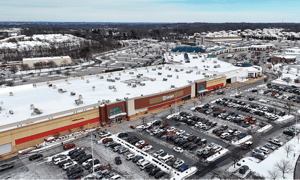
Before pursuing any new opportunity, snow contractors should conduct a thorough contract-to-fleet analysis. The process is straightforward but can have a significant impact on profitability. Ask the following questions:
- Do we currently own the equipment required to service this property?
- If not, what equipment will need to be rented or purchased?
- What are the annual ownership or rental costs?
- Can the equipment be utilized on other contracts?
- How long will it take to recover the investment?
- What happens if the contract is lost after one season?
These questions shift the focus from contract revenue alone and toward long-term financial performance. Too often, contractors win work only to discover that the equipment investment required leaves little room for profit. A disciplined evaluation process helps prevent these situations.
Renting versus buying
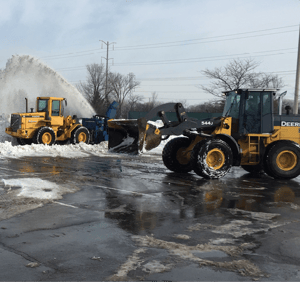
When pursuing new work, contractors often face the decision of whether to rent equipment or purchase it. There is no one-size-fits-all answer. The right decision depends on the type of contract, expected duration and long-term business goals.
For new opportunities, renting equipment can provide several advantages. It allows contractors to evaluate the profitability of an account without making a large capital investment. It also preserves cash flow and reduces financial risk if the contract is not renewed in future seasons.
However, equipment rentals also come with challenges. During major snow events, demand for loaders and specialty equipment can become extremely competitive. Contractors relying on rental equipment should secure commitments well before winter begins and develop strong relationships with equipment suppliers. Many successful contractors rent equipment initially and transition to ownership once they have secured enough recurring business to justify the investment.
Mike McCarron is president and founder of Image Works Landscape Management, a commercial landscape maintenance and snow removal firm in the Northern Virginia market. He has 20+ years of industry experience. Email him at mike@imageworkslandscaping.com.
Related Articles

Rethinking trigger depths in snow contracts
Ice Management
Why accumulation thresholds should be removed from snow management contracts
Success is in the details
Operations
Effective winter preparation requires practice and good communication.

Stress less and enjoy winter: tips for snow contractors
Business
Operations
Clear the stress of running a snow removal business with a few savvy strategies