

Reactionary approach puts winter services companies behind the eight ball

Four tips for smoother winter operations
During a recent SIMA Pacific Northwest Interest Group, Isabelle Bailey, CEO & Founder at Snow Queen Winter Management, shared practical advice for snow professionals looking to strengthen their operations before winter hits. The key message was clear: success in snow removal is not about reacting to storms — it’s about preparing long before the first flakes fall. Here are 4 key takeaways:
-
Proactive planning. Instead of waiting for a storm to arrive and scrambling to respond, leading companies take time in the preseason to map out routes, assign service areas, and set up clear staffing schedules. This foresight ensures that when severe weather arrives, crews can move quickly and confidently without the confusion that often slows down unprepared teams.
-
Strategic service zones. By dividing territories into logical, manageable areas, companies can optimize travel time, reduce delays, and increase customer satisfaction. This simple step of geographic planning not only improves efficiency but also creates a more consistent client experience across all accounts.
-
Streamline dispatch and workflows. Establishing clear communication protocols, resource allocations, and backup plans helps prevent last-minute challenges. With well-defined systems in place, managers can focus on keeping operations smooth during storms rather than putting out fires.
-
Use your planning as a sales tool. When you share your processes with potential clients, such as how you prepare equipment, train staff, or prioritize safety, you demonstrate reliability and professionalism. This positions your company not just as a contractor, but as a trusted partner in managing winter risk.
Check out Isabelle's full presentation and learn more about SIMA's interest groups at sima.org/interest-groups.
In short, the session reinforced that preparation is the true foundation of success in snow removal. By planning routes, creating efficient zones, setting up dispatch systems, and communicating your readiness to clients, you can shift from a reactive approach to a proactive one — and stand out as a dependable choice in a competitive market.
Related Articles
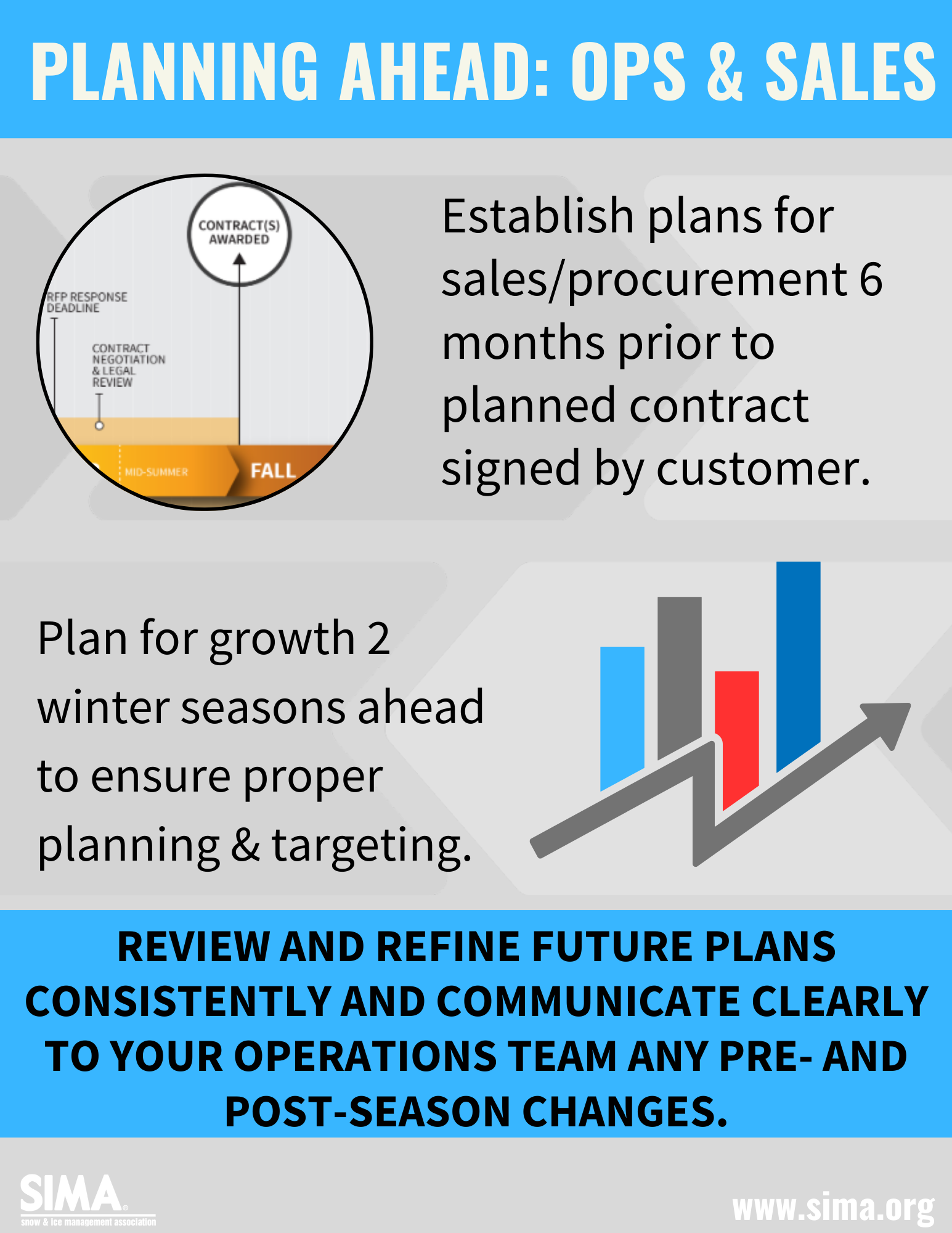
Get serious about snow ops planning
A 52-week snow service procurment timeline can help you get going.
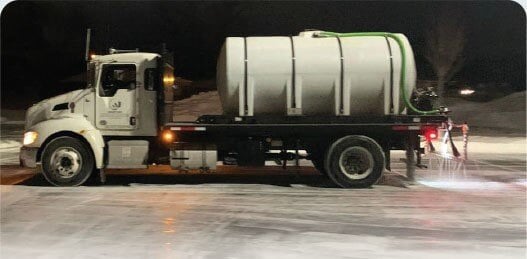
Breaking down barriers
Ice Management
Clearing up misconceptions about costs, effectiveness of liquids.
Essential preseason equipment planning
Operations
True winter readiness requires foresight, standardization, and workforce management