
Keep your snowplow team injury-free with back safety precautions
Snow Business
Ergonomics are key in snowplow operations
In snowplow operations, where workers face unique challenges such as prolonged sitting, poor visibility, and heavy lifting, implementing ergonomic practices is crucial. By focusing on ergonomics, you can significantly reduce the risk of injuries, particularly back injuries, which are among the most common occupational injuries.
The National Safety Council reports that the average cost of a lower back injury is $40,409. This figure underscores the financial impact of ignoring ergonomic practices. Beyond the financial implications, ensuring the well-being of your employees leads to higher morale, increased productivity, and a safer work environment. Check out the three key areas where you can focus on reducing economic risks for your snow removal team.
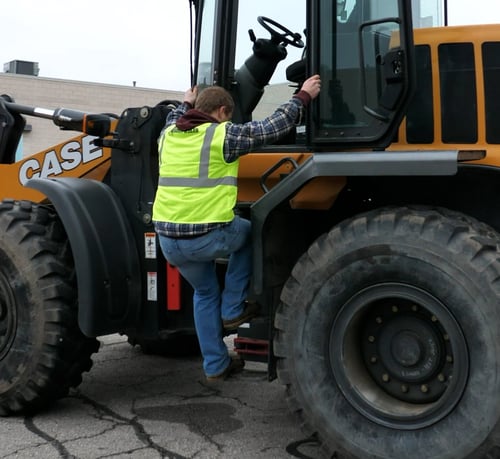
Entering and exiting vehicles
Vehicles that require a climb pose a substantial risk of injury if not handled correctly. Operators should:
- Always use vehicle handholds and steps.
- Avoid jumping or dropping down from vehicles, as this can increase the forces on vertebral discs by 80% to 90%.
- Maintain three points of contact (two hands and one foot or two feet and one hand) and face the vehicle while getting in or out.
Maintaining good posture
Sitting for extended periods can lead to reduced blood flow to the back and loosen the spine, making it more susceptible to injury. Snowplow operators often sit in a static position for long durations, increasing their risk of back problems, especially when exposed to shocks from potholes or obstacles.
To prevent ergonomic injuries, operators should:
- Warm up prior to the shift with stretch and flex exercises.
- Adjust their sitting position every 20 to 30 minutes.
- After sitting for 20 to 25 minutes, spend two minutes avoiding any manual lifting, twisting, or activities that could strain their back. Instead, they should use this time to walk or move around, allowing blood flow to restore to the back and prepare it for action.
- Maintain good posture and control positioning in the cab by minimizing twisting, stooping, or reaching.
Awkward lifts or pulling
The right tools and accessories can significantly reduce the ergonomic risks associated with snowplow operations:
- Some plows are designed to make the attachment process effortless, reducing the need for physical exertion. If your operators use plows that are difficult to connect, consider reaching out to your plow dealer for accessories that can aid in the attachment process.
- Storing materials off the floor and elevating the height at which they are stored can dramatically decrease the stress on the back. Ensure there is adequate access around the load to limit unnecessary reaching or stooping.
Training your team
Training is a critical component of implementing ergonomic best practices. Educate your snowplow team on the importance of ergonomics and provide them with practical tips for reducing the risk of injuries. By investing time and resources in ergonomic training, you can significantly reduce the likelihood of injuries and create a safer work environment.
.png?width=1000&height=1000&name=ASM_Congrats_Tile%20(1).png)