

Think about dialing in calibration for next year, now
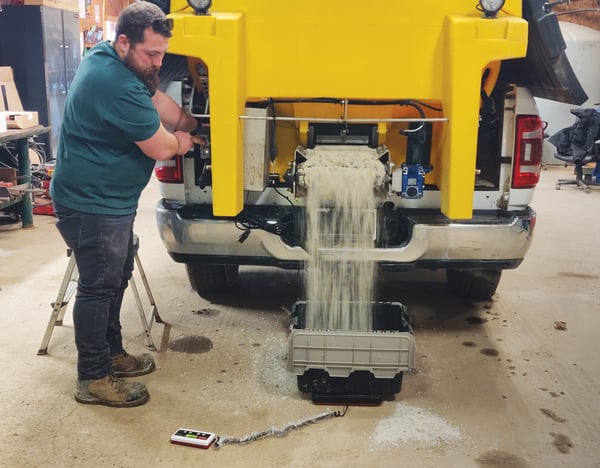
Prioritize spreader calibration every spring
A major misconception in snow and ice management is the "set it and forget it" approach to spreader calibration. You cannot assume one calibration fits all materials. The actual coverage rate (what physically lands on the pavement after passing through your equipment) is heavily impacted by the physical properties of the deicer inside your hopper.
How material can impact output
The coverage rate of a solid deicer is affected by its density, moisture and purity. If any of these factors change, your equipment's output will change with it, requiring recalibration.
-
Density and grain size: The physical size and shape of your deicer matter. Fine salt flows and broadcasts differently than coarse rock salt, pelletized blends, or flake products. A spreader calibrated to apply 300 lbs. per acre of large, coarse rock salt will discharge a different volume if loaded with pellets or fine salt.
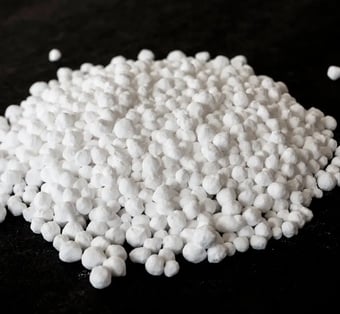 Example: Pellet deicer (source: Peladow.com)
-
Moisture content: Wetter deicers, such as pre-treated salt or salt exposed to high ambient humidity, have higher cohesion. This is especially true for deicers containing calcium chloride or magnesium chloride, which are hygroscopic and actively absorb moisture from the air. This moisture makes the material heavier, stickier, and prone to caking or clumping. This reduces your coverage rate and can clog auger-driven spreaders.
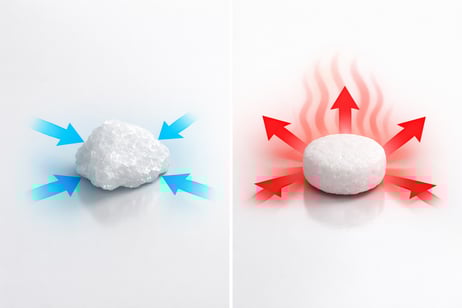 Some deicers are 'more' hygroscopic than others
-
Impurities: Non-deicer material, such as sand, dirt, or silica mixed into bulk rock salt, changes the weight and density of the material flow. These impurities can dilute your final deicing concentration and alter the application rate.
Maintenance and pre-testing equipment
Even with a perfect understanding of your material, your output management will fail if your equipment is not functioning optimally. Before salt goes into the hopper, equipment must be tested and maintained. Proper preseason and pre-storm inspections are critical.
-
Test before loading: Before conducting a calibration drop test, always warm up the truck’s hydraulic oil to normal operating temperatures with the spreader system running. Cold hydraulic fluid flows differently than warm fluid, which can skew your calibration results and cause inconsistent auger or conveyor speeds.
-
Wear items: Moving heavy, dense salt causes significant wear and tear. Consistently inspect chains, conveyors, spinners, and augers for broken, worn, or bent parts. Verify that conveyor chains have proper tension and alignment. Furthermore, because winter environments are incredibly harsh, lubricate all grease fittings with chassis lube rated for cold temperatures (below -20°F/-29°C).
-
Controllers and electrical components: The "brain" of your spreader requires protection. Verify that in-cab electrical controllers, wire harnesses, fuses, and battery cables are free of corrosion and operating normally. Because these electrical components are highly susceptible to damage from corrosive salt and moisture, ensuring clean contacts and intact wiring is necessary to prevent mid-storm spreader failures and maintain accurate groundspeed control.
This material is derived from the SIMA Certified Deicer Applicator program launching in 2026.
Related Articles
Poly-caster spreaders innovation engine
POLY-CASTER spreaders ease operations for CASE, Seabreeze Property Services.

Salt reduction efforts gain legislative momentum
SIMA is seeing an uptick in legislative activity in several states and Canada.

Granular salt usage for sidewalk snow melting
Ice Management