

Parking structures require a specialized approach to winter services
Snow Business
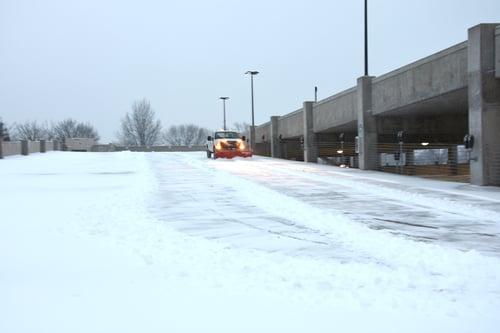
Tips for clearing snow from parking structures
Parking garages and decks aren’t built with winter services at the top of the list. From tight drive lanes and small turning radii to sensitive finishes and load limits, every site brings its own set of headaches.
Unlike open lots, you can’t just pile snow up in the corner—stacking too much on the top deck can push a structure past its load limits, risking collapse and thaw-refreeze cycles that turn decks into ice rinks.
Make sure you know what warranties or site agreements are in place so your work doesn’t void them. If you’re not sure about a site’s specs, ask for them—don’t guess.
Selecting proper equipment and deicing materials
Parking structures aren’t made to handle heavy trucks and tall equipment. Most garages are designed for vehicles under 7,500 lbs. That means full-size plow trucks and big spreaders are usually off the table. Instead, skid steers with attachments, walk-behind blowers, and tailgate spreaders are the workhorses here.
Go with rubber or polyurethane cutting edges to protect finished surfaces, expansion joints, and coatings (another reminder to check the engineering plans for materials that must be used or are prohibited to comply with the warranties). Skip the steel edges unless you want to foot the bill for repairs. For deicing, keep it controlled—over-salting can damage the concrete, joints and drainage.
Best practices for minimizing liability and ensuring site safety
Safety for tenants, customers, and your own crew comes first. If you’re working during business hours, have spotters in place to keep pedestrians safe and keep your operations tight.
Always clear and treat high-traffic areas like entrances, exits, stairs, and ramps. Document your timing—when you start, when you finish, and what you did—because that’s your first line of defense against slip-and-fall claims.
Protecting structural integrity and drainage during snow operations
Never push snow up against architectural details, capstones, or expansion joints—these are usually not built to handle winter abuse. Keep your blades at least a half-inch above these areas, and slow down when you hit ramps or changes in slope to avoid scraping up membranes or sealants.
Don’t dump snow off the top deck unless the area below is secured and you have permission from the property owner. Keep all floor drains clear so meltwater doesn’t back up and cause more hazards. Regularly inspect for damage during and after storms so you can catch issues before they turn into big repair bills.
Related Articles

Protection plan
Business
Sustainable businesses need organizational structure, systems and processes.

M&A - Value boost
Business
Strong organizational structure and systems are attractive to buyers.

Protection guarantee
Business
Process, structure and systems are insurance against failure.