

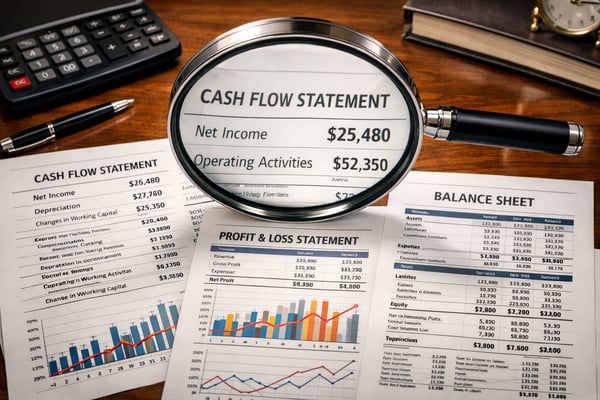
In snow removal, financial details matter
Understanding your financial statements shouldn't feel like decoding a foreign language. For any business owner, these documents are the GPS for your company's journey: they tell you where you’ve been, where you are, and where you’re likely headed.
Here is a quick breakdown of the "Big Three" reports and how to classify the costs that drive them.
The “Big Three” financial statements
-
Profit and Loss (P&L) Statement: Also called an Income Statement, this is a snapshot of your revenue and expenses over a specific timeframe (monthly, quarterly, or yearly). It culminates in your Net Profit, showing exactly what’s left over after the bills are paid.
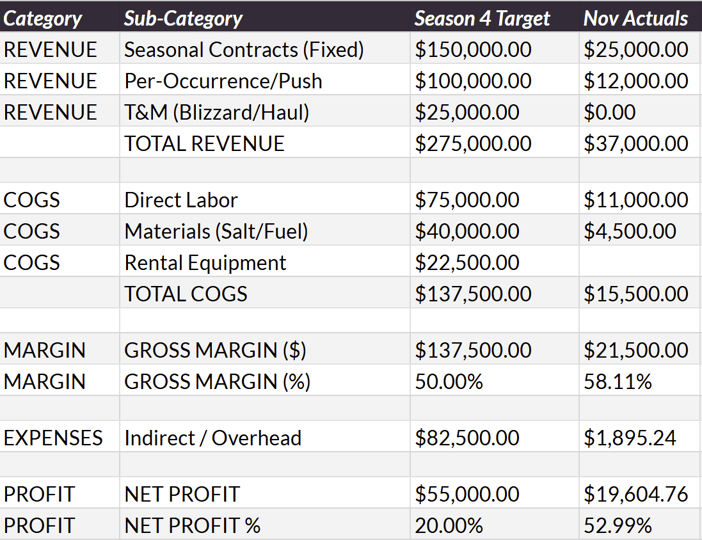 P&L example
 -
Balance Sheet: Unlike the P&L, which covers a period of time, the Balance Sheet is a "freeze-frame" of your financial health at a specific point in time. It balances what you own (assets) against what you owe (liabilities).
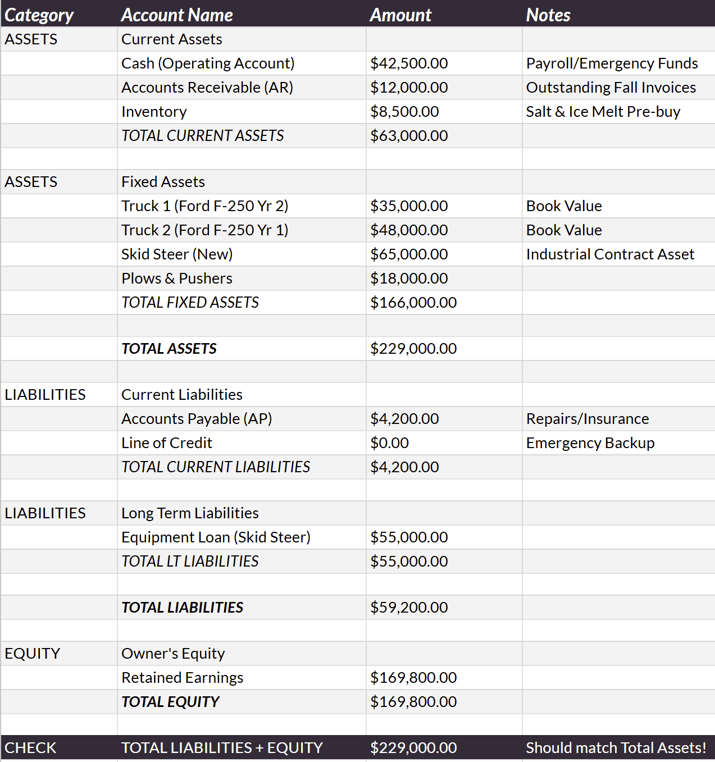 Balance Sheet example
 -
Cash Flow Statement: This tracks the actual movement of money. It’s the "bank account view," detailing how and where cash is entering and exiting the business.
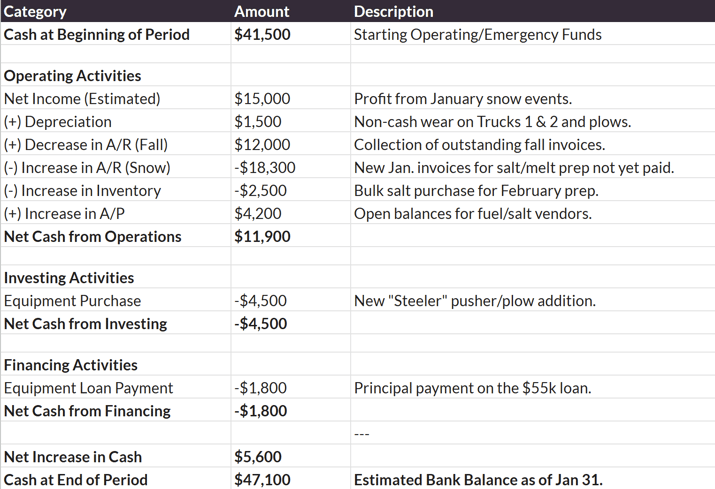 Cash Flow Statement example
Classifying expenses: Cost of Goods Sold vs. Overhead
To truly understand your profitability, you must categorize your spending into two distinct buckets: Cost of Goods Sold (COGS) and Overhead.
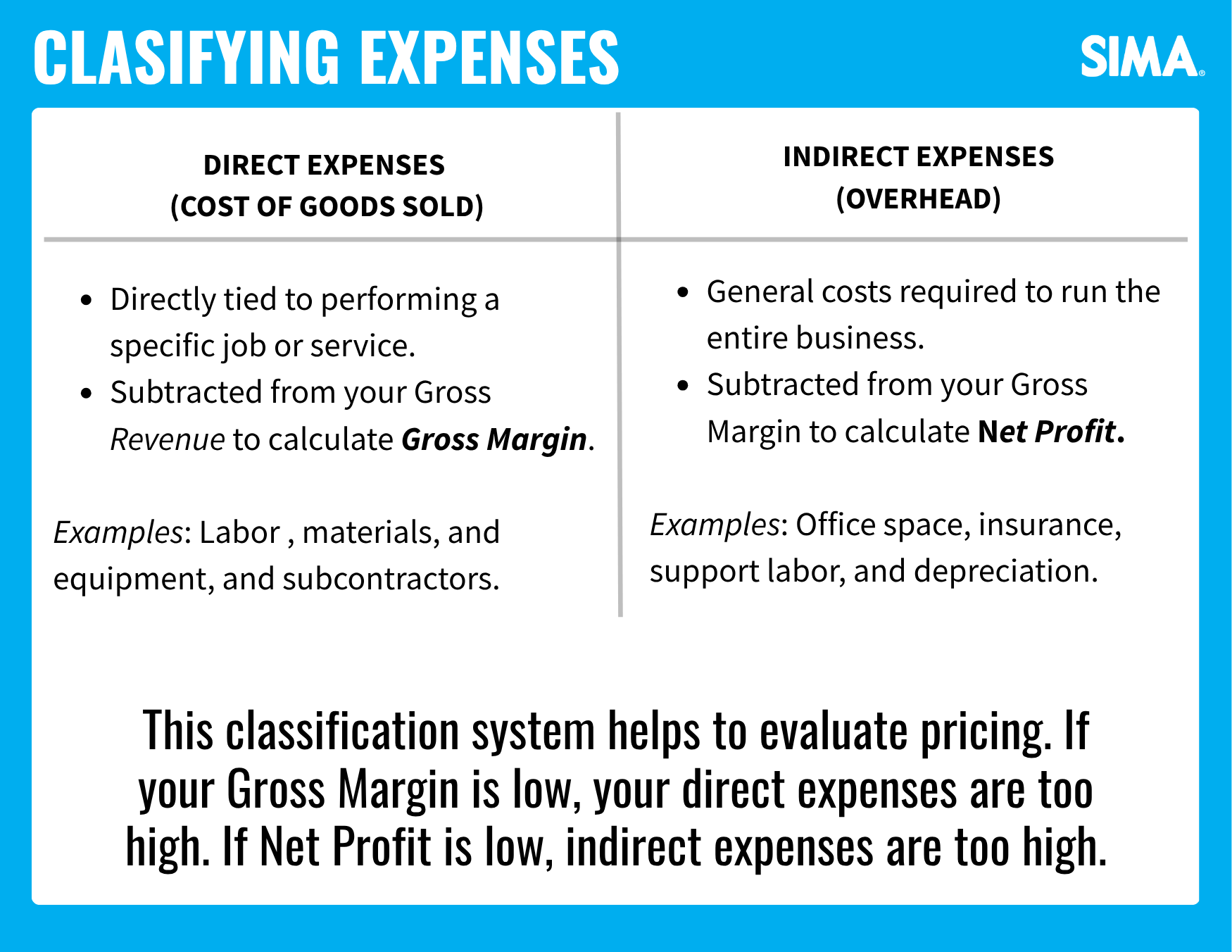
1. Direct expenses (Cost of Goods Sold)
These are costs tied directly to a specific job or service. If you didn't have that specific contract, you wouldn't have these costs.
-
The calculation: Gross Revenue - COGS = Gross Margin.
-
Examples: Field labor, raw materials, equipment rentals for a job, and subcontractors.
2. Indirect expenses (Overhead)
These costs "keep the lights on." They are required to run the business regardless of how many jobs you have on the books.
-
The calculation: Gross Margin - Overhead = Net Profit.
-
Examples: Office rent, insurance, administrative staff salaries, and depreciation.
The bottom line: Evaluating your pricing
This classification system is more than just accounting. It’s designed to serve as a diagnostic tool for your long-term pricing strategy. These rules of thumb can help:
-
Low Gross Margin? Your direct expenses (COGS) are too high. You may need to negotiate better material rates or improve labor efficiency.
-
Low Net Profit? Your indirect expenses (Overhead) are too high. It might be time to trim the "fat" in your administrative or general operating costs.
Download this helpful reminder:.png?width=796&height=615&name=classifying%20expenses%20(2).png)
By mastering these statements and expense types, you move from running a business to managing for profit.
This information was sourced from the SIMA Business Essentials online training course launching in 2026.
Related Articles

Structure before the storm
Business
Making next winter smoother, smarter and more profitable.

Software selection requires strategic process
Business
Choosing the right platform requires ownership and leadership

Beyond the buzzword
Business
Empowerment, accountability and candor build a strong culture.