

Lisa Rose, CSP, ASM
Ensure your snow contracts use clear language to avoid costly lawsuits
I have spent years reviewing snow and ice management contracts. Some are reviewed before the season begins. Others reach my desk after someone has fallen, a lawsuit has been filed, and every decision made during a winter event is being questioned.
Those cases have taught me one lesson repeatedly: Ambiguity is expensive.
A contract isn't just a legal document. It becomes the roadmap for operations, the measuring stick for performance, and ultimately the evidence used to determine whether everyone involved met the accepted standard of care.
After reviewing these cases for years, I have learned this: Every sentence you leave vague becomes someone else's interpretation in court.
When I review contracts as an expert witness, I often ask a simple question that I believe every contractor, property owner and property manager should ask themselves before signing an agreement.
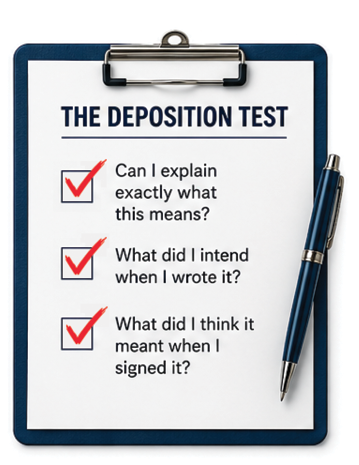
Imagine you are sitting in a deposition two years from now. An attorney projects your contract onto a large screen for everyone in the room to see. The attorney points to a sentence and asks: "Can you explain exactly what you meant when you wrote this?" or "Can you explain what you thought this meant when you signed the contract?"
Would your answer be immediate and confident? Or would it begin with..."Well, what we really intended was"... or "Well, we thought it meant"...
If your explanation begins with what you intended rather than what the contract actually says, you've already identified a problem. That is what I call The Deposition Test. Every provision in your contract should withstand that level of scrutiny.
Your contract becomes your operations manual
Many companies view contracts as paperwork that needs to be completed before the first snowfall. I see them differently. The contract is your operations manual before the snow starts. It should answer every important operational question before the first truck leaves the shop:
- What services will be performed and when?
- What conditions trigger service?
- Who authorizes additional work?
- Who documents the work?
- Who monitors conditions after service is complete?
- Who decides whether additional deicing is necessary?
If the contract doesn't answer these questions, someone will answer them later – but that answer may not favor you. Just because you have had a long-standing relationship with a customer, that is no guarantee that customer will stand by your side during an expensive litigation process.
Scope of work: Where expectations become reality
Many disputes don't arise because someone failed to perform. They arise because everyone assumed something different, including:
- Does snow removal include sidewalks?
- Are loading docks included?
- Who clears accessible parking stalls?
- Who removes snow around fire hydrants?
- Who treats shaded walkways?
- Who is responsible for refreeze after daytime melting?
- What about roof runoff? Downspouts?
- Snow relocated by another contractor or on-site personnel?
- Landscape islands that create drainage problems?
I have reviewed contracts in which the contractor, property owner and property manager gave a different answer about who was responsible for sidewalks. All three believed the contract supported their position. That is not flexibility – that is a failure to define the scope. If those responsibilities aren't clearly assigned, they don't disappear. They simply become disputed.
Service levels matter
One of the best ways to eliminate misunderstandings is to clearly define service levels and what those services entail.
- How frequently will the property be monitored?
- Who will monitor the property after a snow event?
- Will anti-icing applications be performed?
- Is pretreatment included?
- How many return visits are included?
- Are refreeze inspections included?
- Who authorizes additional applications?
The more clearly expectations are defined before winter begins, the fewer disagreements occur after an incident. In one matter, the contractor believed its responsibility ended when precipitation stopped. The property manager believed the contractor was also responsible for monitoring melt and refreeze conditions throughout the following day. The contract did not clearly resolve the issue. By the time the parties were deposed, each had a different explanation of the same language.
A few additional sentences in the scope of work could have prevented hours of testimony and a significant dispute over responsibility.
Documentation is part of the scope
One of the most common observations I make during litigation has nothing to do with snow removal itself. Sometimes I believe the contractor probably performed excellent work; unfortunately, the contractor can't prove it. Today's contracts should define documentation expectations just as carefully as plowing expectations. They should include:
- GPS records
- Arrival and departure times
- Weather observations
- Material application rates
- Site photographs
- Inspection notes
- Customer communications
- Service verification
Documentation no longer supports operations. It is part of operations and a critical defense to a lawsuit that can occur years after the event.
Snow doesn't read contracts
Winter weather rarely follows trigger depths. Snow changes to freezing rain. Rain changes to sleet. Daytime melting becomes overnight refreeze. Snow piles begin producing runoff several days after the storm. Yet, many contracts still focus almost exclusively on snowfall accumulation.
A well-written contract should address ice management separately from snow removal. It should define how freeze-thaw cycles, refreeze events, runoff, and changing weather conditions will be monitored and managed. These are the situations that frequently lead to litigation.
Communication is a risk management tool
Every contract should identify who has authority to make decisions. A property manager may believe the contractor has authority to apply additional salt, while the contractor believes prior approval is required. That disagreement should be resolved in the contract, not during testimony after a fall. Clear communication prevents assumptions, which often become allegations.
Ambiguity is expensive
Over the years, I've reviewed contracts of every size from contractors and property owners/managers. Some were one-page agreements, others exceeded 50 pages. The best contracts do not need to be the longest contracts. They need to clearly identify the work, assign responsibility and establish how performance will be documented. The best contracts don't necessarily contain more language. They contain better language. Most importantly, they provide a clear operational roadmap long before the first winter event arrives.
Final thoughts
Every winter storm and every property is different. Every customer has different expectations. Your contract should acknowledge those differences instead of relying on generic language copied from another agreement. Because when an incident occurs, no one asks what you intended. They ask what your contract required.
Before you finalize your next agreement, perform The Deposition Test. Read every sentence and ask: "If this sentence was projected on a screen during my deposition two years from now, would I be completely comfortable explaining exactly what it meant?"
If the answer is anything less than an immediate "yes," rewrite it. Because ambiguity is expensive. And every sentence you leave vague becomes someone else's interpretation in court.
The Most Expensive Words in a Contract
"Reasonable"
"As needed"
"Promptly"
"Maintain safe conditions"
"When appropriate"
"If necessary"
Some of the costliest words I encounter when reviewing contracts sound harmless. These phrases may seem flexible, but flexibility often creates uncertainty. Consider the phrase: "Contractor will apply salt as needed."
- Needed according to whom?
- Based on what weather conditions?
- Who makes that decision?
- How often is the property evaluated?
- What documentation supports that decision?
During litigation, one vague phrase can generate hours of testimony because everyone has a different interpretation. The goal isn't simply to write a contract. The goal is to eliminate unnecessary interpretation.
Lisa Rose, CSP, ASM, is a partner in Allin / Rose Consulting, Inc., a consultant and expert witness in various aspects of snow and ice management. Contact her at Lisa@AllinRose.com.
Related Articles
.jpg?width=1000&height=670&name=031%20(1).jpg)
Closing the gaps - Imageworks Landscaping
Business
ImageWorks Landscaping conquers cultural, language barriers to build team cohesion.
-1.jpg?width=344&height=300&name=017%20(1)-1.jpg)
Getting squeezed
Business
Shorter, later seasons force snow companies to rethink business as usual.